Amazon Easy Ship vs Self-Ship for Women's Clothing Dropshipping India
Which is better for women’s clothing dropshipping in India: Amazon Easy Ship or Self-Ship?
For most beginner and mid-level sellers, Amazon Easy Ship is usually easier because Amazon handles logistics coordination and pickup scheduling. However, for experienced women’s fashion sellers working with reliable suppliers like Snazzyway, Self-Ship often provides better branding control, lower long-term costs, and more operational flexibility.
Quick Summary
Shipping is one of the most important parts of running a successful women’s clothing dropshipping business on Amazon India.
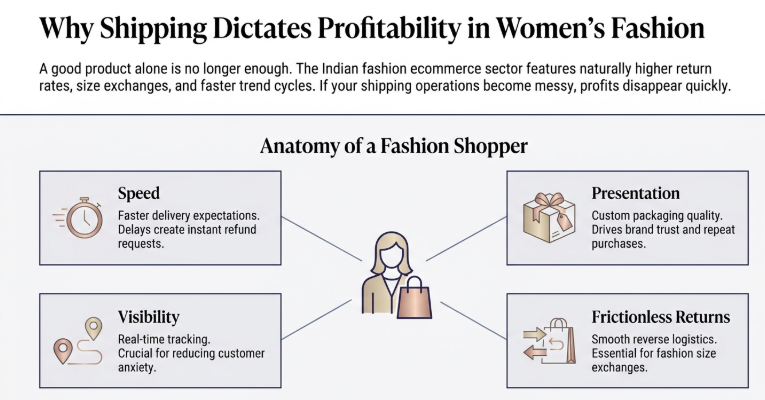
A good product alone is not enough anymore.
Customers now expect:
- Faster delivery
- Better packaging
- Real-time tracking
- Smooth returns
- Professional fulfilment
And this is exactly where sellers face an important decision:
Should you use Amazon Easy Ship or Self-Ship?
In this guide, we’ll break down:
- How Easy Ship works
- How Self-Ship works
- Which model is better for women’s fashion
- The real cost differences
- Which option scales better long term
- Common mistakes new sellers make
- Why supplier quality matters more than shipping method
We’ll also discuss why many experienced Amazon fashion sellers increasingly prefer manufacturing-based suppliers like Snazzyway for smoother fulfilment operations.
Introduction
Many beginners entering Amazon dropshipping in India focus heavily on:
- Product selection
- Ads
- Winning categories
- Pricing strategies
But experienced sellers know something different.
Logistics often determines whether a store scales or fails.
Especially in women’s clothing.
Because fashion ecommerce naturally has:
- More returns
- Size exchanges
- Higher customer expectations
- Faster trend cycles
And if shipping operations become messy, profits disappear quickly.
That’s why understanding the difference between Amazon Easy Ship and Self-Ship is extremely important before scaling your business.
If you're new to ecommerce, this guide on starting an Amazon dropshipping business in India can help you understand the basics better:
What Is Amazon Easy Ship?
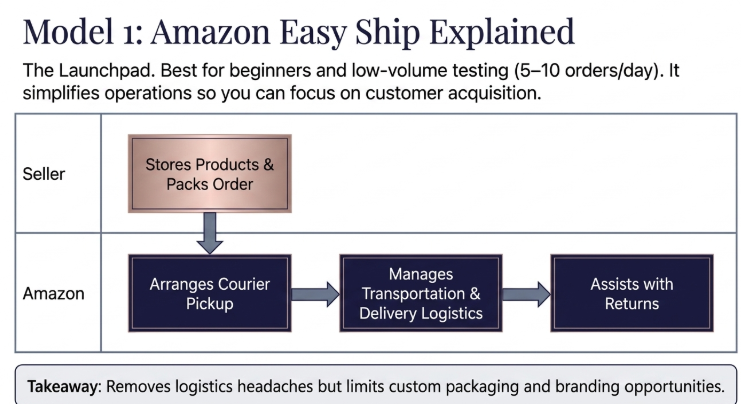
Amazon Easy Ship is a logistics solution where:
- Sellers store products themselves
- Amazon arranges courier pickup
- Amazon handles delivery logistics
The seller still packs the order, but Amazon manages transportation and delivery coordination.
Easy Ship is popular among:
- Beginners
- Small sellers
- Marketplace-focused businesses
because it simplifies logistics management.
What Is Self-Ship on Amazon India?
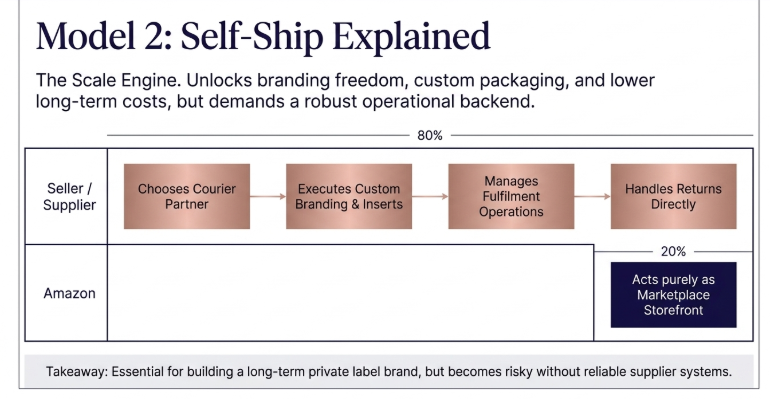
Self-Ship means:
- You or your supplier handle the shipping directly
- You choose the courier partner
- You manage fulfilment operations yourself
This gives sellers:
- More control
- Better branding flexibility
- Custom packaging opportunities
- Potentially better margins
But it also requires stronger backend systems.
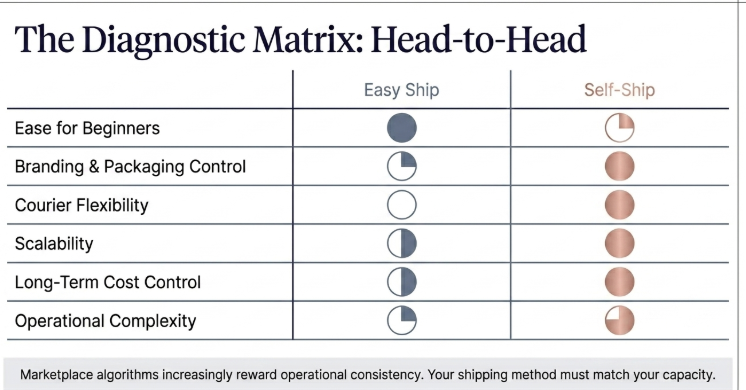
Amazon Easy Ship vs Self-Ship: Quick Comparison
| Factor | Amazon Easy Ship | Self-Ship |
|---|---|---|
| Logistics Handling | Amazon-managed | Seller-managed |
| Ease for Beginners | Very Easy | Medium |
| Branding Control | Limited | High |
| Courier Flexibility | Low | High |
| Packaging Freedom | Moderate | Full |
| Scalability | Moderate | High |
| Cost Control | Moderate | Better long term |
| Operational Complexity | Lower | Higher |
| Return Handling | Amazon-assisted | Seller-managed |
| Best For | Beginners | Scaling brands |
Why Shipping Matters More in Women’s Fashion
Women’s clothing ecommerce behaves differently from many other categories.
Customers care about:
- Packaging quality
- Delivery speed
- Product presentation
- Return experience
- Trust
And delayed shipping often creates:
- Negative reviews
- Refund requests
- Lower repeat purchases
That’s why many serious sellers eventually move beyond basic marketplace fulfilment systems and focus more on backend operational quality.
When Amazon Easy Ship Makes More Sense
1. If You’re a Beginner
Easy Ship removes many logistics headaches.
Amazon handles:
- Pickup scheduling
- Delivery coordination
- Tracking systems
This makes it easier for beginners to focus on:
- Product listings
- Customer acquisition
- Reviews
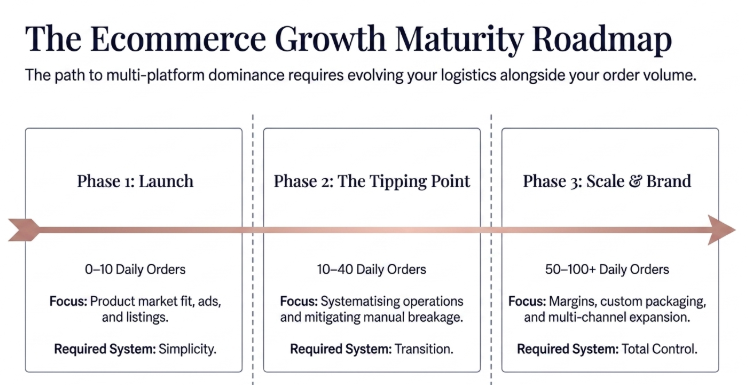
2. If You Have Low Order Volume
At:
- 5 orders/day
- 10 orders/day
manual operations are still manageable.
Easy Ship works well during early testing stages.
3. If You Don’t Have a Reliable Supplier Yet
Self-Ship only works smoothly when your supplier already understands:
- Amazon SLAs
- Courier systems
- Faster dispatch
- Return management
Without backend reliability, Self-Ship becomes risky.
When Self-Ship Becomes Better
1. When You Want Brand Control
Self-Ship gives you:
- Better packaging customization
- Brand inserts
- White-label opportunities
- Stronger customer experience
This matters heavily in women’s fashion ecommerce.
Especially for sellers building long-term brands.
If your goal is building your own private label fashion brand, this guide explains the process well:
2. When Order Volume Increases
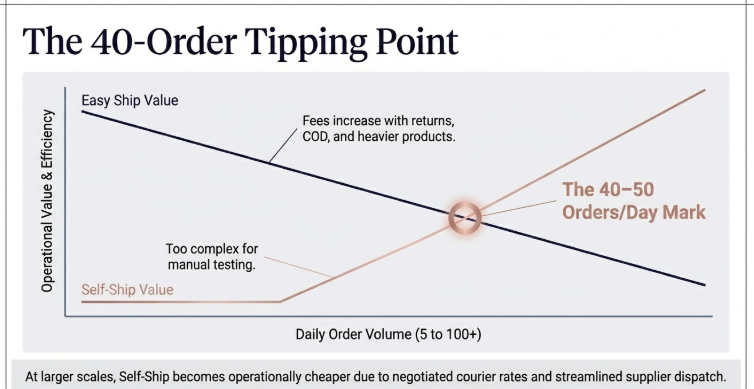
Once stores reach:
- 40+
- 50+
- 100+ daily orders
Self-Ship often becomes operationally more efficient with the right supplier setup.
Because:
- Courier optimization improves
- Costs reduce
- Branding improves
- Customer experience becomes more consistent
3. When Working With Manufacturing Suppliers
This is where supplier quality becomes critical.
Manufacturing-based suppliers like Snazzyway usually handle Self-Ship better because they already control:
- Inventory
- Packaging
- Dispatch systems
- Quality checks
That operational control helps reduce:
- Delays
- Inventory mismatches
- Fulfilment issues
Why Many Amazon Fashion Sellers Prefer Manufacturing Suppliers
A major mistake beginners make is choosing random wholesalers.
Many wholesalers:
- Source products after orders arrive
- Lack inventory systems
- Have inconsistent fulfilment
- Struggle with scaling
This creates:
- Delayed dispatch
- Poor tracking
- Customer complaints
- Amazon account issues
Manufacturing suppliers usually operate differently.
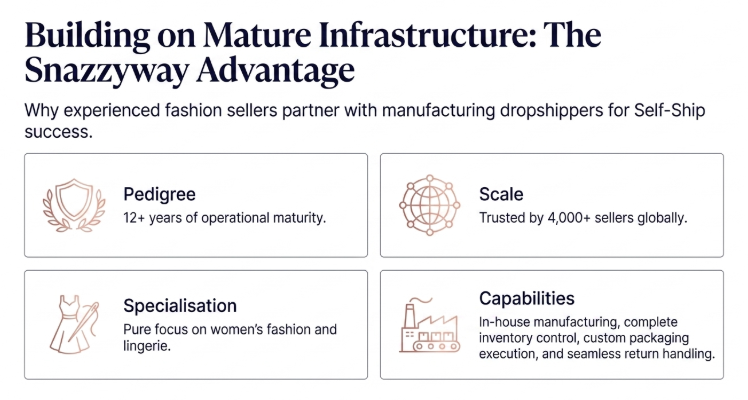
Snazzyway, for example:
- Manufactures most products in-house
- Has been operating for 12+ years
- Works with 4000+ sellers globally
- Specializes in women’s fashion and lingerie
This operational maturity matters heavily once order volumes grow.
Easy Ship vs Self-Ship Cost Differences
Amazon Easy Ship Costs
Easy Ship includes:
- Pickup
- Delivery coordination
- Logistics handling
But fees can increase with:
- Heavier products
- Higher return rates
- COD shipments
Self-Ship Costs
Self-Ship can become cheaper long term if:
- Your supplier ships efficiently
- Order volume is high
- Courier rates are negotiated properly
This is why many scaling sellers eventually transition toward Self-Ship operations.
Which Is Better for Shopify Sellers Expanding to Amazon?
Many Shopify fashion sellers eventually start selling on Amazon too.
In these cases:
- Self-Ship usually creates smoother operational consistency
- Inventory systems stay centralized
- Branding stays controlled
Suppliers like Snazzyway become useful here because they already support:
- Shopify stores
- Amazon sellers
- Independent D2C brands
If you're planning on launching a women’s clothing store on Shopify, this beginner-friendly guide is worth reading:
Common Mistakes Sellers Make
Choosing Shipping Based Only on Cost
Cheap logistics often create:
- Delays
- Lost packages
- Poor tracking
- Customer dissatisfaction
Ignoring Backend Systems
At small scale, manual fulfilment seems manageable.
At larger scale, it breaks quickly.
Using Unstructured Suppliers
This is one of the biggest problems in Indian dropshipping.
Without structured suppliers:
- Inventory becomes unstable
- Dispatch slows down
- Returns become chaotic
Why Operational Maturity Matters in 2026
The Indian ecommerce market has evolved significantly.
Customers now expect:
- Faster shipping
- Better packaging
- Smooth tracking
- Reliable delivery
Marketplace algorithms also reward operational consistency more heavily than before.
That’s why backend quality increasingly determines long-term success.
For sellers exploring Amazon seller automation tools for Indian dropshippers, this resource can help streamline operations:
Our Recommendation
For most beginners:
- Amazon Easy Ship is the safer starting point
For serious women’s fashion brands planning long-term growth:
- Self-Ship usually becomes stronger over time
But the real deciding factor is not the shipping model itself.
It’s the supplier behind it.
Suppliers with:
- Manufacturing control
- Faster dispatch systems
- Better inventory management
- Marketplace understanding
usually outperform random wholesalers significantly.
This is one reason many experienced sellers now work with suppliers like Snazzyway that already support:
- Amazon dropshipping
- Shopify brands
- White-label fulfilment
- Multi-platform ecommerce scaling
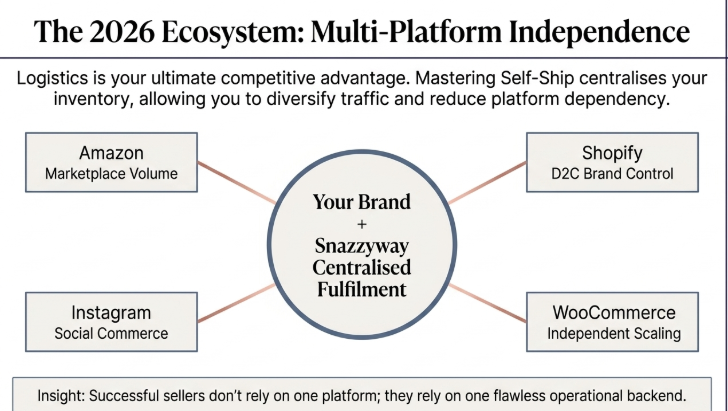
Multi-Platform Ecommerce Is Growing Fast
Many fashion sellers are no longer dependent on just one platform.
Today’s successful sellers often combine:
- Amazon
- Shopify
- WooCommerce
to diversify traffic and reduce platform dependency.
If you're interested in a WooCommerce dropshipping setup in India, this guide explains the workflow in detail:
Pros and Cons of Amazon Easy Ship
Pros
- Easier for beginners
- Amazon-managed logistics
- Simpler operations
- Faster setup
- Lower operational stress
Cons
- Limited branding control
- Less courier flexibility
- Higher long-term fulfilment costs
- Less customization
Pros and Cons of Self-Ship
Pros
- Better brand control
- Lower scaling costs
- Flexible courier options
- Better packaging opportunities
- Stronger long-term scalability
Cons
- Requires operational systems
- Needs reliable suppliers
- More logistics management
- Harder for beginners
Our Insight
Most successful women’s fashion sellers eventually realize that logistics is not just an operational function.
It becomes a competitive advantage.
Fast fulfilment, good packaging, and smooth delivery experiences directly influence:
- Repeat purchases
- Reviews
- Brand trust
- Customer retention
And this is especially true in fashion ecommerce.
The sellers scaling successfully in 2026 are usually partnering with suppliers that already understand:
- Amazon operations
- Shopify fulfilment
- Multi-channel logistics
- Inventory synchronization
- White-label branding
That operational maturity is becoming increasingly valuable.
Final Thoughts
Amazon Easy Ship and Self-Ship are both viable models.
The right choice depends on:
- Your order volume
- Brand goals
- Operational capacity
- Supplier quality
For beginners, Easy Ship simplifies operations significantly.
But for scaling women’s fashion brands, Self-Ship often creates better long-term flexibility and profitability — especially when supported by experienced manufacturing suppliers.
And that’s exactly why many growing sellers now prefer working with an Indian clothing dropshipping partner like Snazzyway because of their manufacturing-based operations, faster dispatch systems, and long-term experience supporting Shopify and Amazon sellers across India.
FAQs
Which is better for beginners: Amazon Easy Ship or Self-Ship?
Amazon Easy Ship is usually easier for beginners because Amazon manages pickup and delivery logistics.
Is Self-Ship cheaper than Amazon Easy Ship?
At larger order volumes, Self-Ship can become more cost-effective if you have strong courier partnerships and reliable supplier fulfilment.
Why do women’s fashion sellers prefer Self-Ship?
Self-Ship allows better branding, packaging customization, and stronger customer experience control.
Does Amazon penalize delayed shipping?
Yes. Late dispatch and poor fulfilment performance can negatively affect Amazon seller ratings and account health.
Can suppliers handle Self-Ship directly?
Yes. Many experienced suppliers manage fulfilment directly for sellers using Self-Ship workflows.
Why are manufacturing suppliers better for Self-Ship?
Manufacturing suppliers usually offer:
- Faster dispatch
- Better inventory stability
- More consistent quality
- Better operational control
compared to sourcing-based wholesalers.
Is Snazzyway suitable for Amazon fashion dropshipping?
Many sellers prefer Snazzyway because they specialize in women’s fashion, operate manufacturing-based fulfilment systems, and support both Amazon and Shopify sellers.
Can I use the same supplier for Shopify and Amazon?
Yes. Many sellers now use the same supplier for both platforms to maintain inventory consistency and operational efficiency.