Quick answer: Dropshipping is a 100% legal online retail model in India where you sell products without holding inventory — your supplier ships directly to the customer. In 2026, it remains one of the lowest-cost ways to start an e-commerce business in India, but success now depends on GST compliance, a reliable domestic supplier, and a niche with real demand (apparel, lingerie, accessories, and home goods remain top performers).
India's e-commerce market is on track to grow from roughly $113 billion in 2026 to nearly $300 billion by 2029, driven by rising internet penetration and digital payments adoption. That growth has made dropshipping one of the most accessible entry points into online retail for new entrepreneurs — but the rules of the game have changed since 2023. GST 2.0, tighter marketplace compliance, and a more competitive market mean you need an updated playbook. This guide covers exactly that.
What Is Dropshipping?
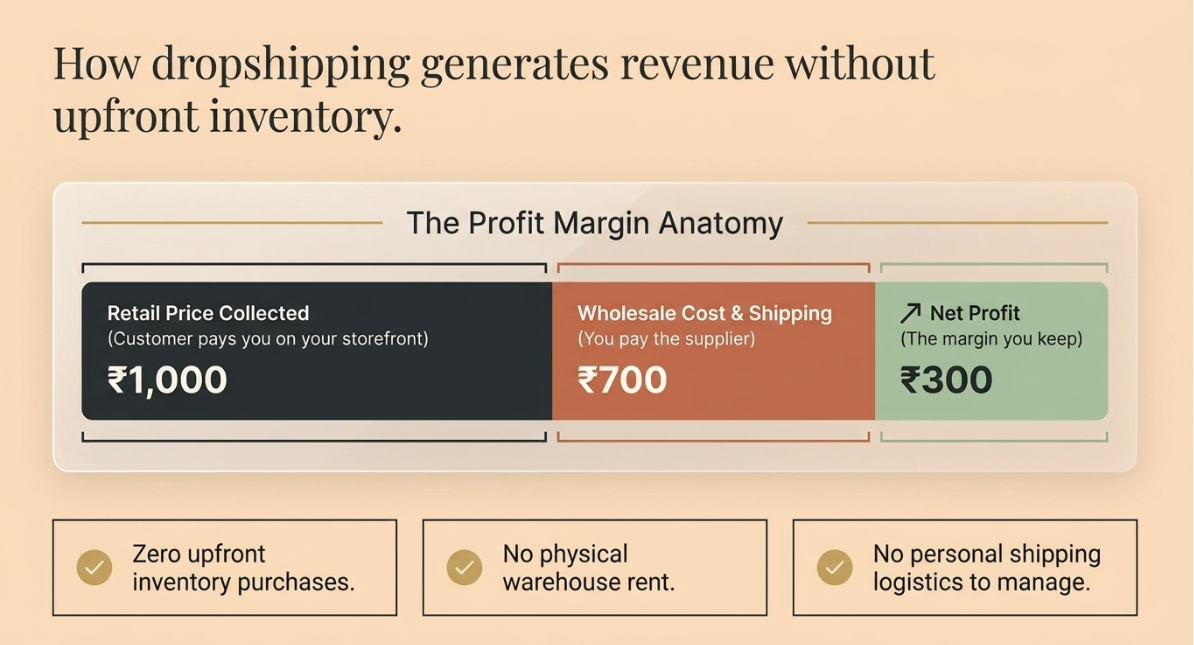
Dropshipping is an order-fulfillment model where your online store sells products it never physically stocks. When a customer places an order, you forward the order details to a third-party supplier or manufacturer, who packs and ships the product directly to the customer under your brand. You collect the retail price, pay the supplier their wholesale cost, and keep the difference as profit.
The core appeal is simple: no warehouse, no upfront inventory purchase, and no shipping logistics to manage yourself.
Is Dropshipping Legal in India?
Yes. There is no law in India that prohibits the dropshipping business model. It's treated the same as any other online retail or marketplace-selling business — legality depends on compliance, not the model itself.
To operate legally, you need to:
- Register your business as a sole proprietorship, partnership, LLP, or private limited company.
- Obtain GST registration. Most online marketplaces (Amazon, Flipkart, Meesho) require a GSTIN regardless of turnover, even though the standard offline threshold is ₹40 lakh for goods. A small number of categories on platforms like Meesho currently allow GST-free selling — check current platform policy before listing.
- File income tax returns on your dropshipping profits; the basic exemption threshold under the current regime is ₹3 lakh.
- Follow platform-specific rules — Amazon, Flipkart, Shopify, and Meesho each have their own seller policies on sourcing, prohibited items, and dropshipping disclosures.
- Respect IP and import regulations — never list counterfeit goods, copyrighted images, or items restricted under Indian import law.
This section is for general informational purposes and isn't a substitute for advice from a qualified CA or tax professional — GST rules are updated periodically, so verify current rates on the official GST portal before filing.
How Does Dropshipping Work? (Step by Step)
- Customer places an order on your online store.
- You forward the order (product, quantity, shipping address) to your supplier.
- The supplier packs and ships the product directly to the customer — often with your branding if they offer white-label or private-label packaging.
- You keep the margin between your selling price and the supplier's wholesale price.
You never touch the product. Your job is choosing the right products, running the storefront, and converting traffic into orders.
Why Dropshipping Still Works in India in 2026
| Benefit | Why It Matters |
|---|---|
| Low startup cost | No inventory purchase, no warehouse rent — you can launch with a website and marketing budget alone. |
| No inventory risk | You only pay for what's already sold, eliminating dead stock. |
| Fast niche testing | Add or remove products without sunk inventory costs, so you can chase demand quickly. |
| Domestic supplier advantage | Partnering with Indian suppliers (instead of overseas) cuts shipping time from weeks to days and reduces COD return rates. |
| Lower overhead | No physical storefront means more budget for ads, content, and customer experience. |
Common Challenges (and How to Solve Them)
| Challenge | Practical Fix |
|---|---|
| Intense competition | Differentiate with a tight niche, better photography, and faster customer support rather than competing purely on price. |
| Shipping delays | Work with domestic suppliers and reputed courier partners (Delhivery, Shiprocket, Bluedart) instead of overseas dropshipping. |
| Inconsistent product quality | Vet suppliers with sample orders before listing products live. |
| Counterfeit or low-quality stock | Only partner with verified manufacturers or established B2B dropshipping platforms with transparent sourcing. |
| GST and compliance confusion | Register early, use accounting software or a CA, and keep HSN codes and invoices organized from day one. |
GST and Tax Rules for Dropshippers in India (2026 Update)
India moved to a simplified GST 2.0 structure in September 2025. For most e-commerce and dropshipping categories, including apparel, the applicable slabs are now 5% and 18%, with a separate 40% rate reserved for luxury and sin goods. Key points to know:
- Marketplace sellers generally need a GSTIN regardless of turnover, even though the offline threshold remains ₹40 lakh for goods (₹20 lakh in special-category states).
- TCS (Tax Collected at Source): Marketplaces collect 1% TCS on net taxable supplies and remit it on your behalf — you reconcile this when filing returns.
- HSN codes must be applied correctly on every invoice; each product category has its own code and rate.
- Exports: If you sell exclusively to international customers and are paid in foreign currency, different export-of-services rules may apply — get this reviewed by a tax professional.
- Penalties: Late GST filing attracts a fee of roughly ₹50/day (₹20/day for nil returns), and prolonged non-filing can lead to GSTIN cancellation and marketplace account suspension.
Because GST slabs and compliance rules are revised periodically, always confirm current rates on the official GST portal before pricing your products.
How to Start a Dropshipping Business in India: Step-by-Step Roadmap
Step 1: Choose a Profitable Niche
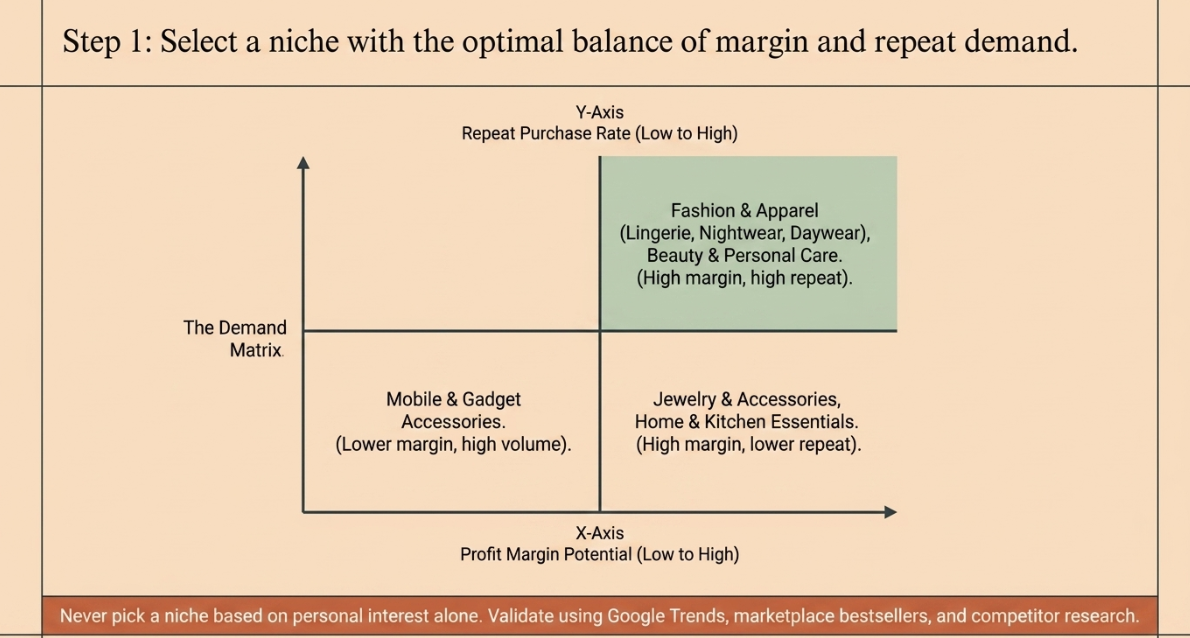
Pick a category with consistent demand, healthy margins, and manageable competition. In 2026, the strongest-performing Indian dropshipping niches include:
- Fashion and apparel (especially lingerie, nightwear, and daywear, where repeat purchase rates are high)
- Jewelry and accessories
- Home and kitchen essentials
- Beauty and personal care
- Mobile and gadget accessories
Validate demand using Google Trends, marketplace bestseller lists, and competitor research before committing.
For a deeper look at demand trends, supplier landscape, and margin benchmarks within a specific category, independent research like HeadlessBiz's dropshipping niche reports can serve as a useful second opinion alongside your own validation.
Step 2: Find a Reliable, India-Based Supplier
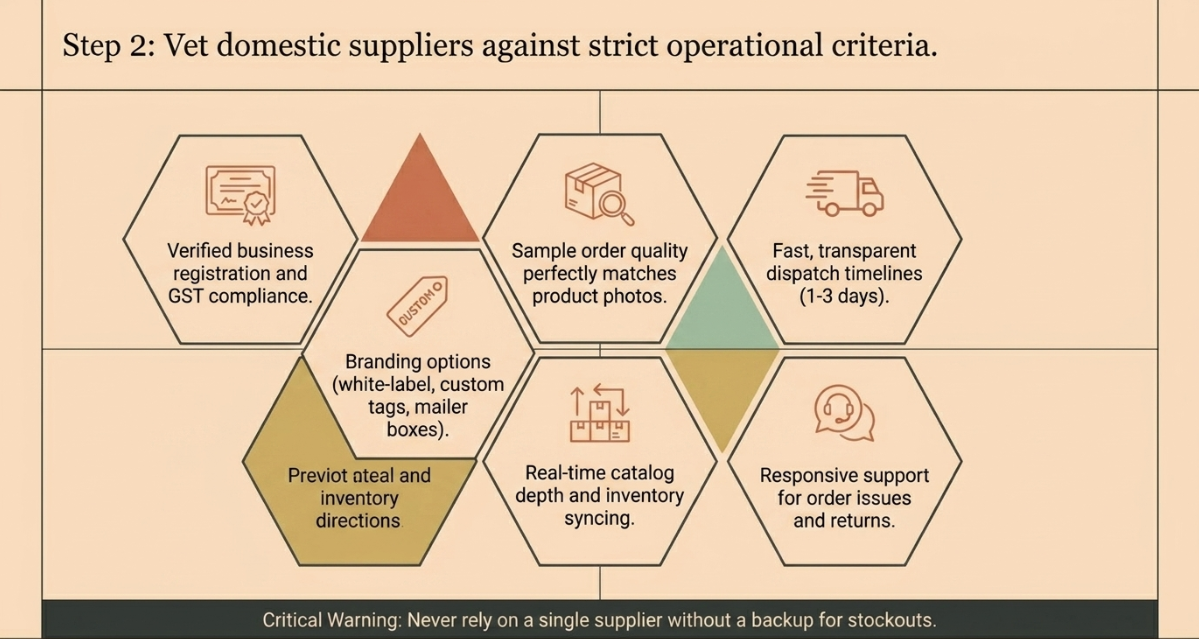
This is the single highest-leverage decision in your business. Look for suppliers who offer:
- Verified manufacturing or wholesale sourcing (not just resale of unknown stock)
- Fast domestic dispatch (1–3 days, not weeks)
- Real-time inventory and order syncing
- White-label or private-label packaging options
- Transparent pricing with no hidden minimums
Domestic B2B dropshipping platforms — built specifically for Indian resellers — typically outperform overseas suppliers on delivery speed, return handling, and COD support.
Step 3: Set Up Your Online Store
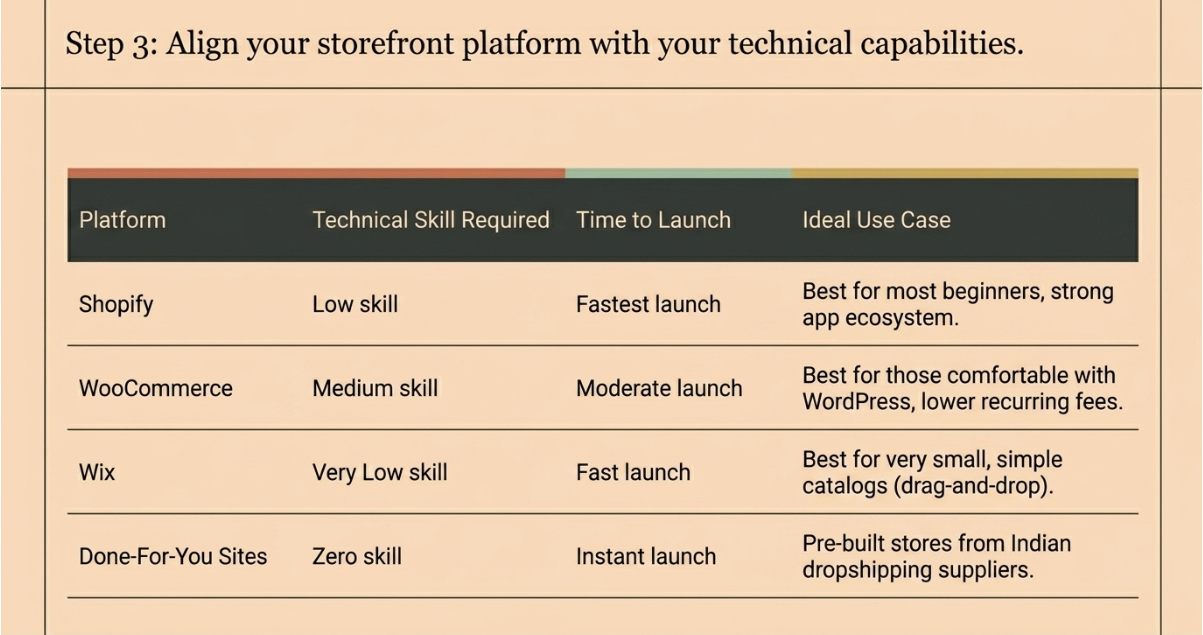
Choose a platform that matches your technical comfort and budget:
| Platform | Best For |
|---|---|
| Shopify | Fastest setup, strong app ecosystem, ideal for most beginners |
| WooCommerce (WordPress) | More control and lower fees if you're comfortable with WordPress |
| Wix | Simple drag-and-drop builder for very small catalogs |
| Done-for-you dropshipping websites | Pre-built, niche-ready stores offered by some Indian dropshipping suppliers — fastest path to launch |
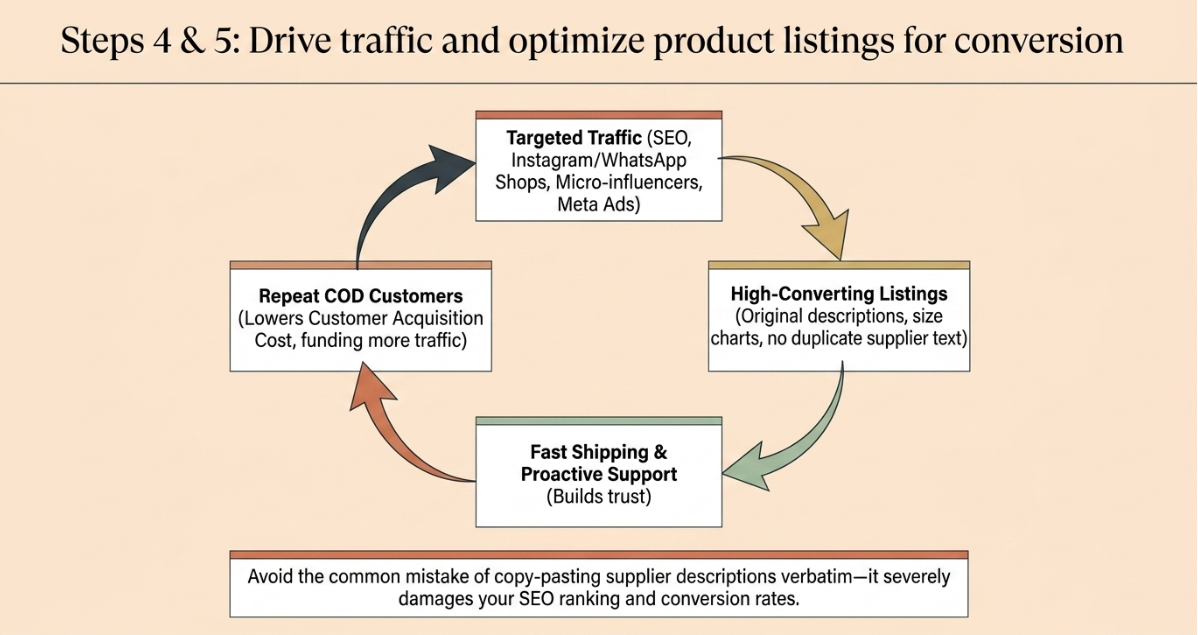
Step 4: List Products with Strong Content
Use high-quality images and original product descriptions (not copy-pasted supplier text — duplicate content hurts your SEO). Add size charts, materials, and care instructions where relevant; detailed product pages convert better and rank better.
Step 5: Market Your Store
A store with no traffic doesn't generate sales. Combine these channels:
- SEO: Optimize product and category pages around how real customers search (e.g., "buy nightwear online India").
- Social commerce: Instagram and Facebook Shops, plus WhatsApp Business catalogs, drive a large share of Indian online apparel sales.
- Influencer and UGC marketing: Micro-influencers in fashion and lifestyle niches deliver strong ROI at lower cost than celebrity endorsements.
- Paid ads: Meta and Google Ads for targeted reach once you've validated your offer organically.
Step 6: Deliver Excellent Customer Service
Fast response times, clear return/exchange policies, and proactive shipping updates build the trust that turns first-time buyers into repeat customers — critical in a market where COD and returns are common.
Choosing the Right Dropshipping Supplier: A Checklist
- ✅ Verified business registration and GST compliance
- ✅ Sample order quality matches the product photos
- ✅ Clear, published shipping timelines
- ✅ Responsive support for order issues and returns
- ✅ Catalog depth and update frequency
- ✅ Branding options (private label, custom tags, mailer boxes)
Common Mistakes to Avoid
- Choosing a niche based on personal interest alone, without checking real demand
- Skipping supplier sample orders before going live
- Ignoring GST registration until a marketplace account gets flagged
- Copy-pasting supplier descriptions verbatim (hurts SEO and conversions)
- Underestimating customer service as a growth lever
- Relying on a single supplier with no backup for stockouts
Frequently Asked Questions
Is dropshipping legal in India in 2026? Yes. Dropshipping is fully legal as long as you register your business, comply with GST rules, and follow each marketplace's seller policies.
Do I need GST registration to start dropshipping in India? In most cases, yes — marketplaces like Amazon and Flipkart require a GSTIN regardless of turnover. A few categories on platforms such as Meesho currently allow selling without GST, but this varies, so check current platform policy.
How much money do I need to start dropshipping in India? You can start with a modest budget covering a store platform subscription, basic marketing spend, and sample orders — typically far less than the inventory investment required for traditional retail.
What are the best dropshipping niches in India right now? Fashion and apparel (especially lingerie and nightwear), jewelry, home essentials, beauty products, and mobile accessories are consistently strong performers due to high repeat-purchase rates and broad demand.
Should I use an overseas or a domestic supplier? For the Indian market, domestic suppliers generally outperform overseas ones on shipping speed, return handling, and COD reliability — all of which directly affect customer satisfaction and repeat orders.
Which platform is best for a dropshipping store: Shopify, WooCommerce, or Wix? Shopify is the fastest to set up and most beginner-friendly. WooCommerce offers more control at a lower recurring cost if you're comfortable with WordPress. Wix suits very small, simple catalogs.
How do I find a reliable dropshipping supplier in India? Vet suppliers with a sample order first, confirm GST and business registration, check dispatch timelines, and look for transparent, no-hidden-minimum pricing before committing.
Conclusion
Dropshipping remains one of the most accessible ways to enter e-commerce in India in 2026 — but the playbook has matured. GST 2.0 compliance, a vetted domestic supplier, and a real marketing plan now separate the businesses that scale from the ones that stall. Get the fundamentals right — niche, supplier, platform, compliance, and customer service — and dropshipping can still be a genuinely profitable way to build an online business in India. Platforms likeSnazzyway Dropshipping — built specifically for Indian apparel resellers — make it easier to get the supplier and fulfillment side right from day one.