Jewelry vs Clothing Dropshipping in India: Profit, Margins & Competition Compared
Quick Answer
Which is better in India: jewelry dropshipping or clothing dropshipping?
Both categories are profitable, but they work very differently.
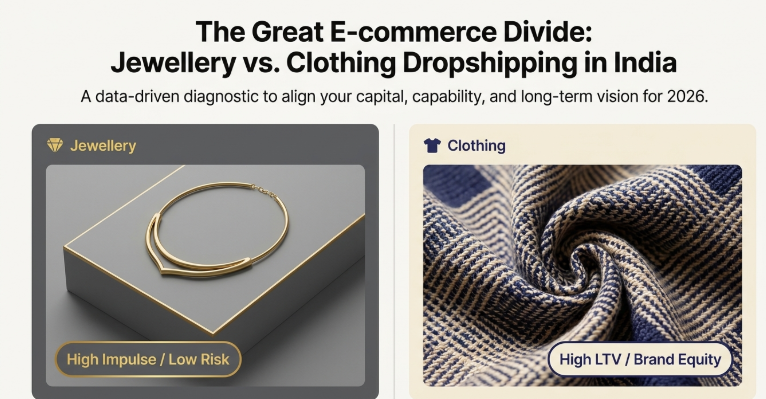
- Jewelry dropshipping usually offers lower inventory risk, faster trend-based sales, and higher impulse buying potential.
- Clothing dropshipping offers stronger long-term branding opportunities, higher repeat customers, and better business scalability.
In 2026, many successful ecommerce sellers in India prefer clothing dropshipping for long-term brand building, while jewelry is often used for faster testing and trend-driven selling.
The right choice depends on your budget, branding goals, competition strategy, and operational capability.
Introduction
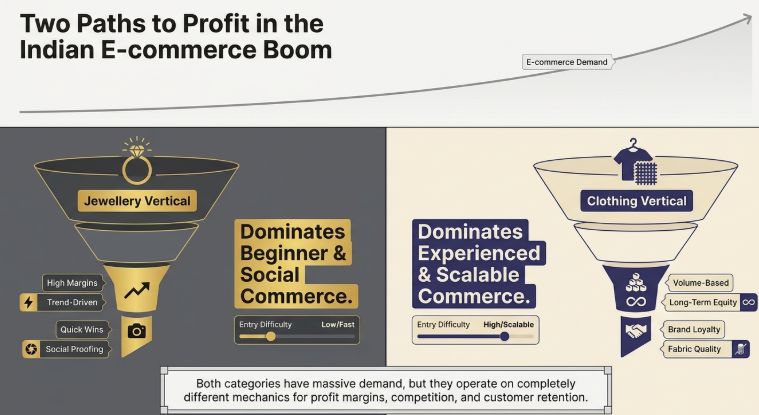
Fashion ecommerce in India is growing rapidly.
Among all ecommerce categories, two segments dominate beginner and mid-level dropshipping businesses:
- Jewelry dropshipping
- Clothing dropshipping
Both industries have massive demand.
But they differ significantly in:
- Profit margins
- Competition levels
- Branding potential
- Return rates
- Customer retention
- Scalability
Many beginners choose jewelry because it appears easier and cheaper to start.
Meanwhile, experienced ecommerce sellers often prefer clothing because it creates stronger long-term brand opportunities.
In this guide, we’ll compare jewelry vs clothing dropshipping in India across profitability, margins, operational complexity, competition, and long-term growth potential.
Understanding Jewelry Dropshipping
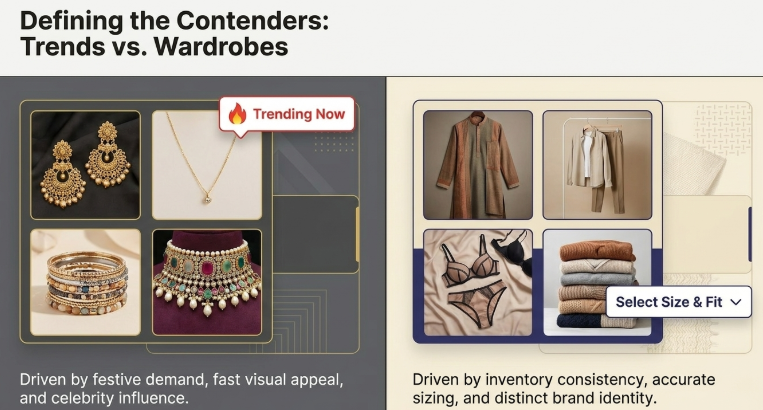
Jewelry dropshipping involves selling:
- Fashion jewelry
- Artificial jewelry
- Earrings
- Necklaces
- Bracelets
- Trend-based accessories
Jewelry is one of the most impulse-driven ecommerce categories.
Customers often buy jewelry based on:
- Trends
- Visual appeal
- Social media influence
- Festive demand
- Celebrity fashion trends
Sellers interested in this category can also understand the business model better through this guide on jewellery dropshipping in India.
Understanding Clothing Dropshipping
Clothing dropshipping focuses on:
- Women’s wear
- Ethnic fashion
- Lingerie
- Western wear
- Casual fashion
- Trend-based apparel
Clothing ecommerce usually requires:
- Better fulfillment systems
- Inventory consistency
- Accurate sizing
- Strong branding
However, it also creates better long-term customer retention compared to jewelry.
Many sellers building long-term fashion brands now prefer structured fulfillment systems with reliable supplier support.
Jewelry vs Clothing Dropshipping: Core Comparison
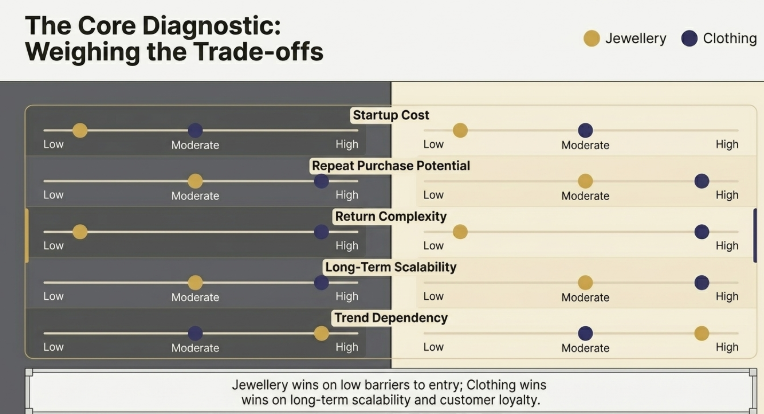
| Factor | Jewelry Dropshipping | Clothing Dropshipping |
|---|---|---|
| Startup Cost | Lower | Moderate |
| Average Selling Price | Lower | Higher |
| Repeat Purchase Potential | Moderate | High |
| Branding Opportunity | Moderate | Excellent |
| Return Complexity | Lower | Higher |
| Product Variety | Very High | High |
| Trend Dependency | High | Moderate |
| Long-Term Scalability | Moderate | High |
| Customer Loyalty | Lower | Higher |
| Competition Level | Very High | High |
Profit Margin Comparison
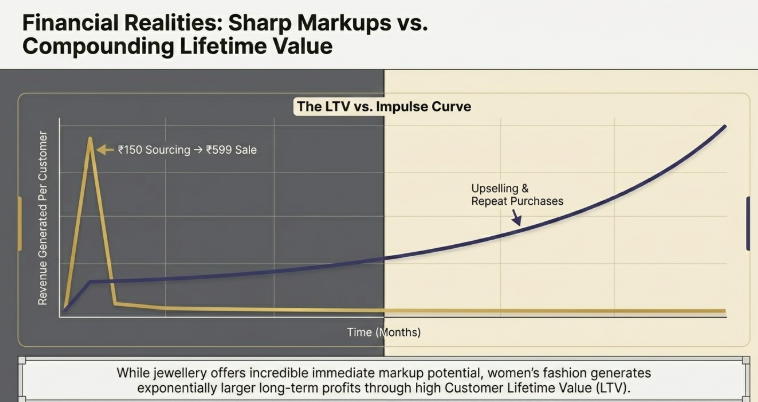
Jewelry Margins
Jewelry usually offers:
- High markup potential
- Lower shipping costs
- Faster impulse purchases
Example:
A ₹150 jewelry product may sell for ₹599–₹999 depending on branding and presentation.
However, competition is also extremely high because barriers to entry are low.
Clothing Margins
Clothing usually offers:
- Better repeat customers
- Higher average order values
- Stronger brand-building potential
Fashion brands often generate larger long-term profits through:
- Upselling
- Repeat buyers
- Collections
- Brand loyalty
Especially in women’s fashion, customer lifetime value becomes much higher over time.
Competition Comparison
Jewelry Competition
Jewelry dropshipping is extremely competitive because:
- Products are easy to source
- Entry barriers are low
- Many sellers use identical products
- Trend cycles change quickly
This creates pricing pressure.
Clothing Competition
Clothing is also competitive, but branding creates differentiation.
Sellers can compete through:
- Better packaging
- Better photography
- White labeling
- Faster delivery
- Unique collections
- Brand identity
This is one reason many serious ecommerce sellers prefer clothing over jewelry long-term.
Why Clothing Brands Scale Better
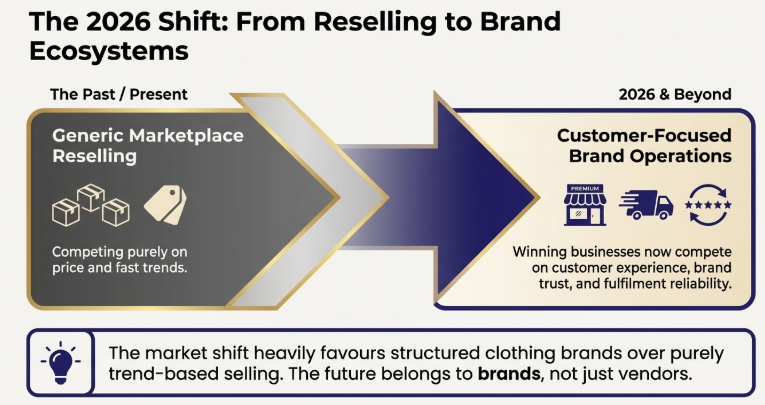
Modern ecommerce is shifting from simple product selling toward real brand building.
Clothing supports this transition much better because sellers can build:
- Repeat customers
- Brand recognition
- Seasonal collections
- Long-term customer loyalty
This is especially important in 2026 where customer experience matters more than ever.
Many sellers building independent fashion stores now prefer branded ecommerce systems instead of generic marketplace reselling. Businesses wanting to understand this model better can explore this guide on white label dropshipping.
Return & Operational Challenges
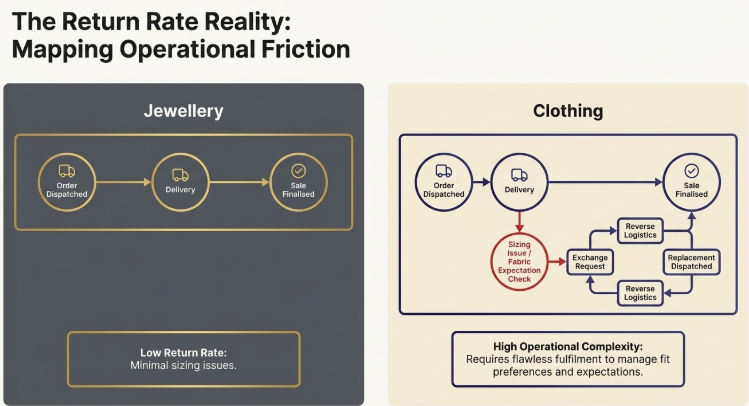
Jewelry Returns
Jewelry usually has:
- Lower return rates
- Simpler logistics
- Easier inventory handling
This makes it beginner-friendly.
Clothing Returns
Clothing has more operational complexity because of:
- Sizing issues
- Fabric expectations
- Fit preferences
- Exchange requests
This is why supplier quality becomes extremely important in fashion ecommerce.
Many ecommerce businesses fail because of fulfillment and operational problems rather than poor marketing. Understanding these issues early through this guide on major dropshipping challenges and solutions can help avoid scaling problems.
Shopify vs Marketplace Selling
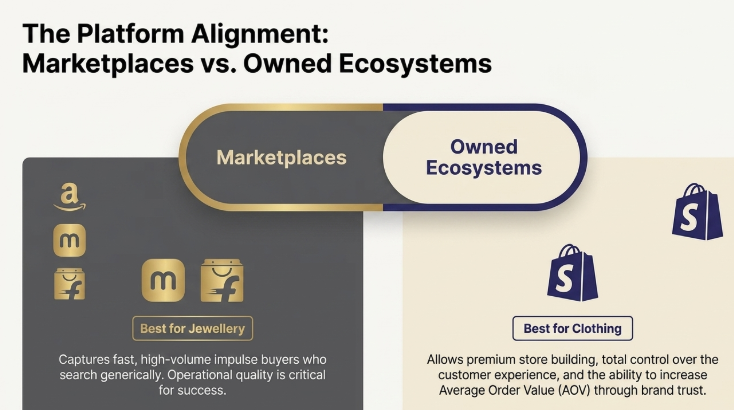
Jewelry on Marketplaces
Jewelry often performs well on:
- Amazon
- Meesho
- Flipkart
Because buyers make faster impulse purchases.
Clothing on Shopify
Clothing usually performs better on independent stores because branding matters more.
Many fashion sellers now prefer Shopify because it allows them to:
- Build premium stores
- Control customer experience
- Create repeat buyers
- Increase average order value
New ecommerce sellers planning to launch their own store can also learn through this guide on how to start dropshipping on Shopify.
Amazon Opportunities
Amazon works well for both jewelry and clothing, but operational quality becomes critical.
Customers expect:
- Fast delivery
- Product consistency
- Professional fulfillment
Sellers interested in marketplace expansion can also explore this detailed guide on Amazon dropshipping in India.
Why Supplier Reliability Matters
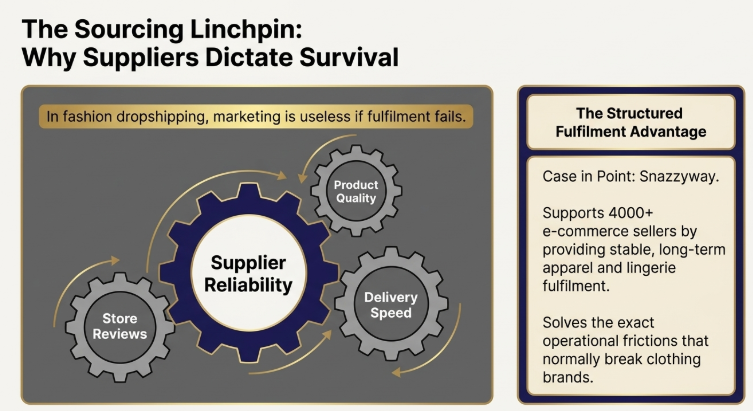
The supplier you choose directly impacts:
- Product quality
- Delivery speed
- Customer trust
- Return rates
- Store reviews
This becomes even more important in clothing ecommerce because customer experience strongly affects repeat purchases.
Sellers searching for reliable women’s fashion sourcing partners often prefer suppliers with stable fulfillment systems and long-term ecommerce experience. Learn more about clothing dropshipping suppliers in India and how modern fashion fulfillment works.
For example, Snazzyway has become popular among many women’s fashion sellers because it works with 4000+ ecommerce sellers and focuses heavily on structured clothing and lingerie fulfillment systems instead of simple reseller-style sourcing.
International Expansion Potential
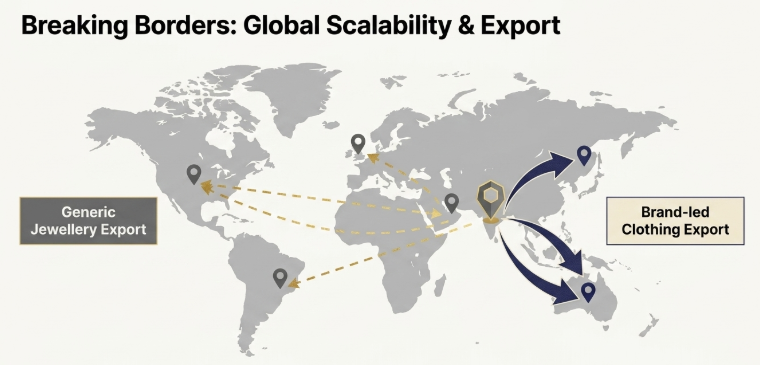
Both jewelry and clothing categories now have growing international demand.
Popular export-focused markets include:
- UK
- UAE
- USA
- Australia
However, clothing brands often create stronger long-term international growth because fashion branding scales globally.
Businesses interested in overseas ecommerce growth can also read this detailed guide on dropshipping from India to the UK.
Pros and Cons
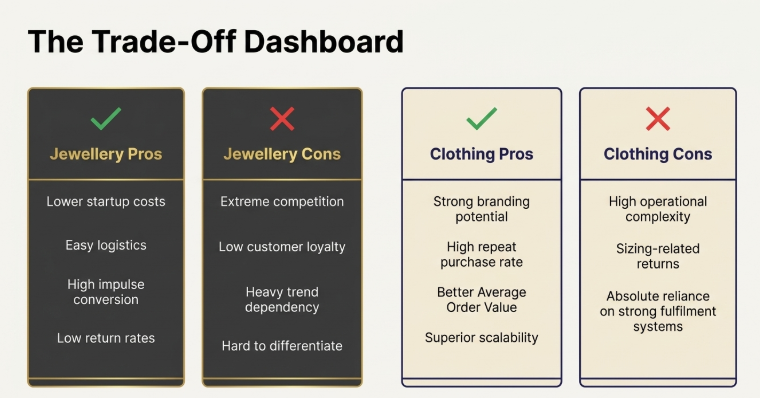
Jewelry Dropshipping Pros
- Lower startup cost
- Easier logistics
- High impulse purchases
- Lower return rates
- Fast trend-based selling
Jewelry Dropshipping Cons
- Very high competition
- Lower customer loyalty
- Trend dependency
- Harder long-term differentiation
Clothing Dropshipping Pros
- Strong brand-building potential
- Higher repeat purchases
- Better customer retention
- Higher average order value
- Better long-term scalability
Clothing Dropshipping Cons
- Higher operational complexity
- Sizing-related returns
- Requires stronger fulfillment systems
- Inventory consistency matters heavily
Our Recommendation
| Business Goal | Better Category |
|---|---|
| Lower Startup Budget | Jewelry |
| Faster Trend Testing | Jewelry |
| Long-Term Brand Building | Clothing |
| Higher Customer Retention | Clothing |
| Easier Logistics | Jewelry |
| Better Ecommerce Scalability | Clothing |
| Shopify Fashion Stores | Clothing |
| Impulse Marketplace Sales | Jewelry |
For most serious ecommerce sellers focused on long-term growth in 2026, clothing dropshipping usually provides stronger business-building opportunities.
Especially for sellers focused on branding, repeat customers, and scalable ecommerce systems.
Our Insight
The ecommerce industry is evolving rapidly.
Winning businesses today compete on:
- Customer experience
- Brand trust
- Fulfillment quality
- Product consistency
- Delivery reliability
This shift strongly benefits structured clothing brands over purely trend-based selling.
Jewelry remains a profitable category, especially for beginners and social-media-driven selling.
But clothing ecommerce usually creates stronger long-term business value because branding and customer loyalty become much more powerful over time.
Final Thoughts
Jewelry and clothing are both profitable ecommerce categories in India.
But they suit different business models.
Choose jewelry if you want:
- Lower startup complexity
- Faster product testing
- Trend-driven selling
- Lower operational risk
Choose clothing if you want:
- Long-term brand building
- Higher repeat customers
- Better scalability
- Stronger ecommerce business value
In 2026, the strongest ecommerce brands are usually the ones that combine reliable fulfillment, strong branding, and customer-focused operations.
FAQs
Is jewelry dropshipping profitable in India?
Yes. Jewelry remains one of the most profitable impulse-buy ecommerce categories in India.
Is clothing dropshipping better than jewelry?
For long-term brand building and customer retention, clothing dropshipping is usually the stronger option.
Which category has higher profit margins?
Both categories can have strong margins, but clothing often creates better long-term profitability because of repeat customers.
Is jewelry dropshipping easier for beginners?
Yes. Jewelry usually has lower startup costs and simpler logistics compared to clothing.
Why do clothing brands scale better?
Because clothing allows stronger branding, repeat purchases, customer loyalty, and higher average order values.
Is Shopify better for clothing dropshipping?
Yes. Shopify works very well for clothing brands because it supports better branding and customer experience.
Which category has lower return rates?
Jewelry generally has lower return rates compared to clothing because sizing issues are minimal.
Why is supplier quality important in fashion ecommerce?
Supplier quality directly affects customer experience, product consistency, delivery speed, and long-term business growth.