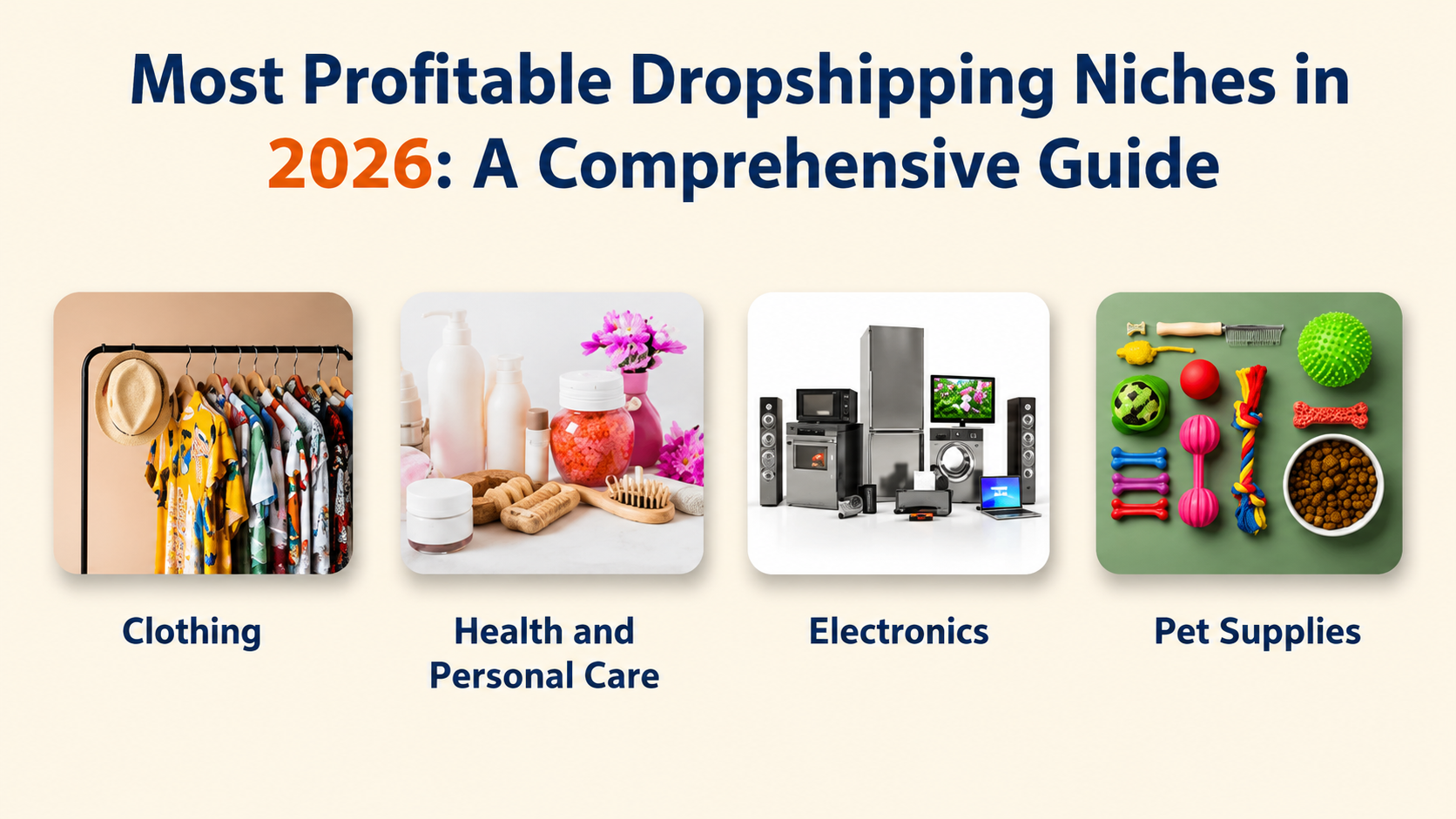
Quick answer: Fashion and apparel — especially lingerie, nightwear, and daywear — remains the single most profitable dropshipping niche in India for 2026, combining a large addressable market, strong repeat-purchase behavior, and healthy margins on private-label products. Jewelry and accessories, beauty and personal care, and home decor follow as strong secondary niches, each with different margin, competition, and compliance trade-offs covered below.
Choosing a niche is the single decision that determines almost everything else about a dropshipping business — your supplier options, your margins, your shipping costs, and how hard you'll have to fight for customer attention. This guide ranks the niches that are actually working for Indian dropshippers in 2026, using a combination of third-party market research and Snazzyway Dropshipping's own platform-wide seller data, not recycled "trending products" lists.
India's broader e-commerce market is on track to grow from roughly $113 billion in 2026 to nearly $300 billion by 2029. That growth isn't evenly distributed across categories — some niches are scaling fast with thin margins, while others are smaller but far more profitable per order. The breakdown below is organized by category, with the market data, margin outlook, and the specific risks you should know about before committing.
How We Evaluated Each Niche
Each niche below is assessed on five factors:
- Market size and growth rate — drawn from published industry research (IMARC Group, Headlessbiz Research, Grand View Research, Mordor Intelligence, and others), cross-checked across multiple sources where estimates diverge.
- Margin potential — how much room exists between supplier cost and a realistic retail price.
- Competition level — how saturated the category is among Indian dropshippers and D2C brands.
- Shipping and compliance complexity — fragility, return rates, certification requirements, and COD suitability.
- Supplier availability in India — whether reliable domestic manufacturing/wholesale supply exists, or whether you're dependent on imports.
Where research firms disagree on exact figures (which is common — methodologies vary), we've noted the range rather than picking a single number to sound more precise than the data actually is.

1. Fashion, Apparel & Lingerie
Market size: Estimates for India's lingerie market alone range from roughly $6 billion to $8 billion in 2025, with most analysts projecting growth of 8–11% annually through the early 2030s. The online segment is growing faster than the category overall — one industry forecast puts India's online lingerie market growing by over $700 million between 2026 and 2030 alone, at close to 12% annually.
Margin potential: High, especially for private-label and in-house-manufactured products, where you control cost price directly rather than competing on a reseller's margin.
Competition: Moderate to high in generic categories (basic tees, casualwear), but meaningfully lower in specific sub-niches like plus-size lingerie, maternity wear, and shapewear, where supplier quality is inconsistent and few sellers specialize.
Why it works: Apparel — and lingerie specifically — has three things most niches don't have together: high repeat-purchase rates, strong margins on private-label goods, and growing comfort among Indian consumers with buying these categories online rather than in-store. Snazzyway's own platform-wide seller data from May–June 2026 showed this in practice: value pack panties led all collections with over 3,100 sales and 110% month-over-month growth, with Rajasthan, Uttar Pradesh, and Maharashtra accounting for the bulk of order volume — a useful reminder that regional ad targeting matters as much as product selection.
Best sub-niches to enter: Bra sets, nightwear, panties, and daywear fashion consistently perform well due to repeat purchase behavior. For a deeper look at whether this specific category is worth specializing in, see Hedlessbiz detailed analysis on lingerie as a dropshipping niche.
Risk to know: Lingerie and intimate apparel have structurally higher return rates than most apparel categories — largely a sizing/fit issue. Suppliers who treat these items as non-returnable (common practice in this category) and provide accurate size charts materially reduce this risk for resellers.
2. Jewelry & Accessories
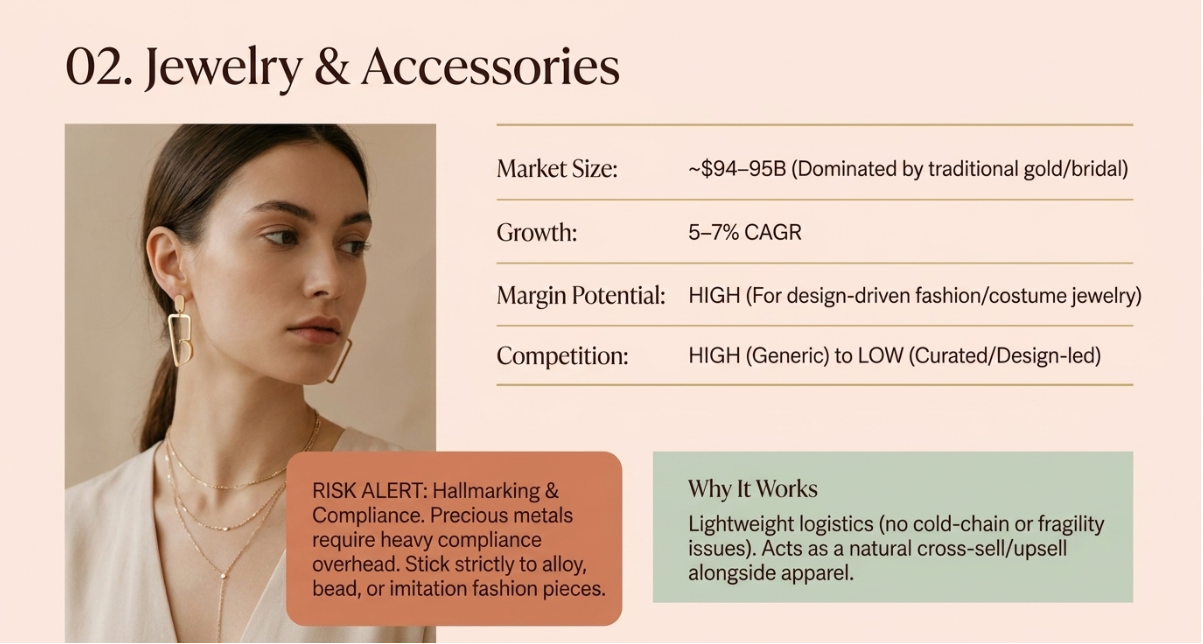
Market size: India's jewelry market is large — roughly $94–95 billion in 2025 by most estimates — but that figure is dominated by gold and bridal jewelry sold through traditional and organized retail, not dropshipping. The market is projected to grow at 5–7% annually through the early 2030s, with online and lightweight daily-wear fashion jewelry growing faster than the category average.
Margin potential: High for fashion/costume jewelry (low material cost, design-driven pricing); low for anything involving real gold, silver hallmarking, or gemstones, where compliance and authentication requirements add cost and complexity unsuited to a dropshipping model.
Competition: High on generic, undifferentiated pieces; lower on curated, design-led collections.
Why it works: Fashion jewelry is lightweight, doesn't require cold-chain or fragile-item shipping precautions, and pairs naturally with apparel and gifting occasions — a strong complementary or upsell category for a jewelry dropshipping line alongside apparel.
Risk to know: India's hallmarking and certification requirements apply to gold and silver jewelry; stick to fashion/costume jewelry (alloy, beads, imitation finishes) unless you're prepared to handle the compliance overhead that comes with precious metals.
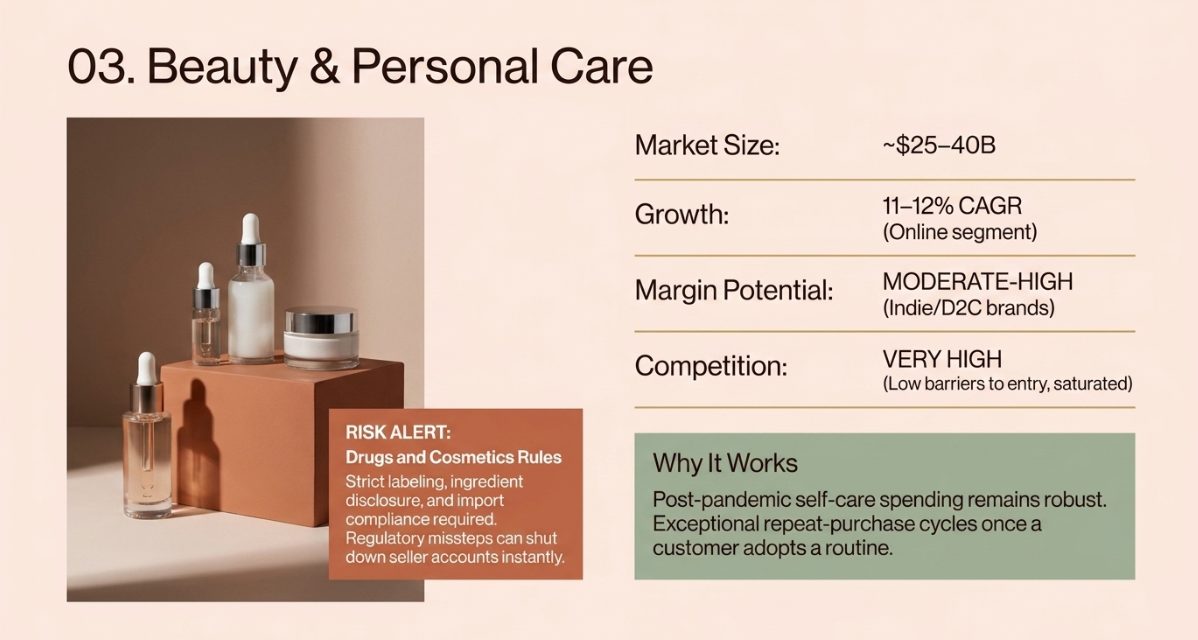
3. Beauty & Personal Care
Market size: Estimates vary considerably by research firm and scope, generally placing India's beauty and personal care market in the $25–40 billion range, with the online segment growing meaningfully faster — global online beauty and personal care sales are projected to grow at roughly 11–12% annually through the early 2030s, a rate India's urban, mobile-first consumer base tends to track closely or exceed.
Margin potential: Moderate to high, particularly for indie and D2C-style brands; thin for reselling well-known international brands where price competition is intense.
Competition: Very high. This is one of the most crowded dropshipping categories in India, with low barriers to entry and a flood of similar suppliers.
Why it works: Self-care and grooming spending has held up well post-pandemic, and skincare/haircare have strong repeat-purchase cycles once a customer finds a product that works for them.
Risk to know: Cosmetics sold in India fall under the Drugs and Cosmetics Rules, which govern labeling, ingredient disclosure, and import compliance. Verify your supplier's compliance documentation before listing — this is one of the few niches where a regulatory misstep can shut down a marketplace account quickly.
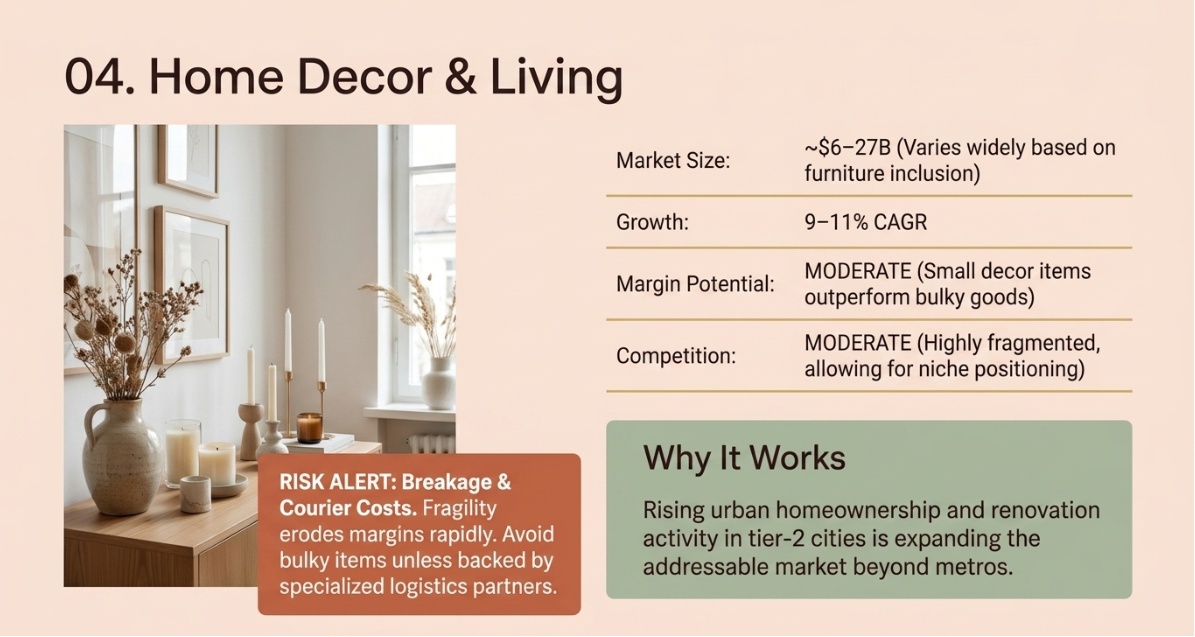
4. Home Decor & Living
Market size: This is the niche with the widest spread in published estimates — figures range from roughly $6 billion to nearly $27 billion depending on whether the research includes furniture, or restricts scope to decor and furnishings only. What's consistent across sources is the growth rate: most place online home decor growth at 9–11% annually through the early 2030s, outpacing the offline segment.
Margin potential: Moderate, but variable — small decor items (candles, wall art, organizers) carry better margins relative to shipping cost than bulky furniture.
Competition: Moderate, with meaningful regional fragmentation — strong opportunity for niche positioning (eco-friendly, space-saving, festive/seasonal decor) rather than competing broadly.
Why it works: Rising urban homeownership and renovation activity in tier-2 cities is expanding the addressable market beyond the metro-only customer base this category used to rely on.
Risk to know: Breakage and return-shipping costs on fragile or bulky items erode margins quickly if your supplier doesn't package for courier-grade handling. Stick to smaller, durable items unless you have a logistics partner experienced with this category.
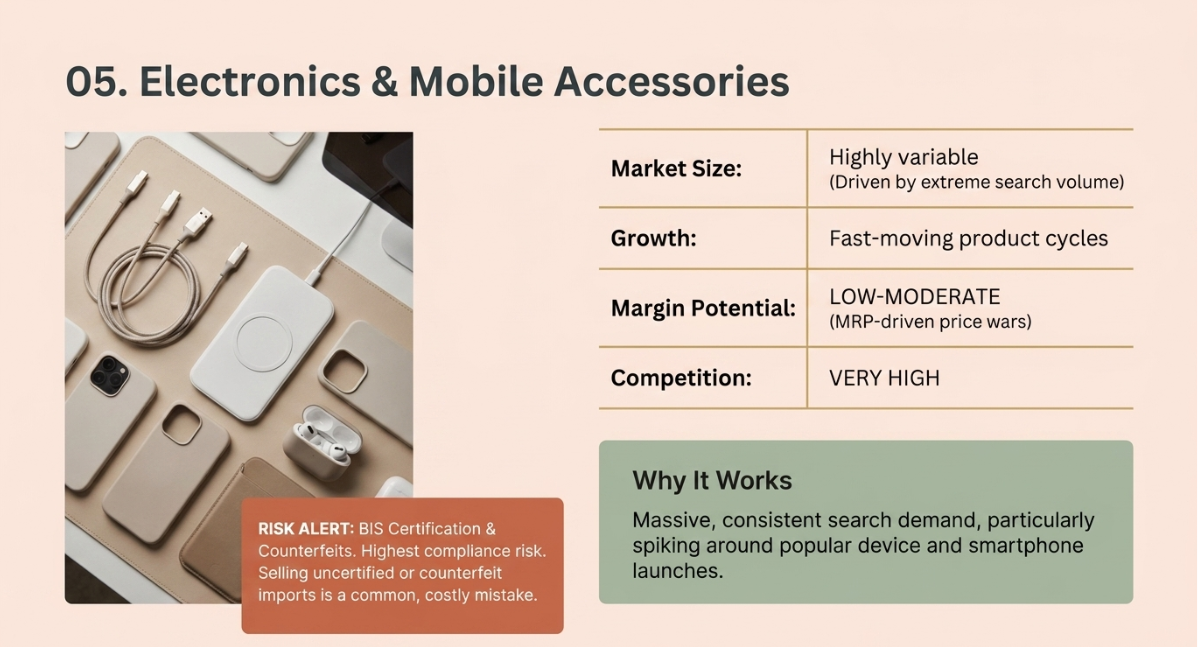
5. Electronics & Mobile Accessories
Market size: Search volume and consumer demand for this category are consistently among the highest of any dropshipping niche in India, but published market-size figures vary too widely across sources to cite a single reliable number here.
Margin potential: Low to moderate. Branded electronics carry thin margins due to MRP-driven price competition; accessories (cases, chargers, cables) offer better margins but face intense price-based competition on marketplaces.
Competition: Very high, and rapidly shifting as product cycles move fast.
Why it works: High and consistent search demand, especially for accessories tied to popular device launches.
Risk to know: This is the highest-compliance-risk niche on this list. Electronics sold in India require BIS (Bureau of Indian Standards) certification for many categories, and counterfeit or non-compliant imports are a common — and costly — mistake among new dropshippers. Vet supplier certification before listing anything in this category.
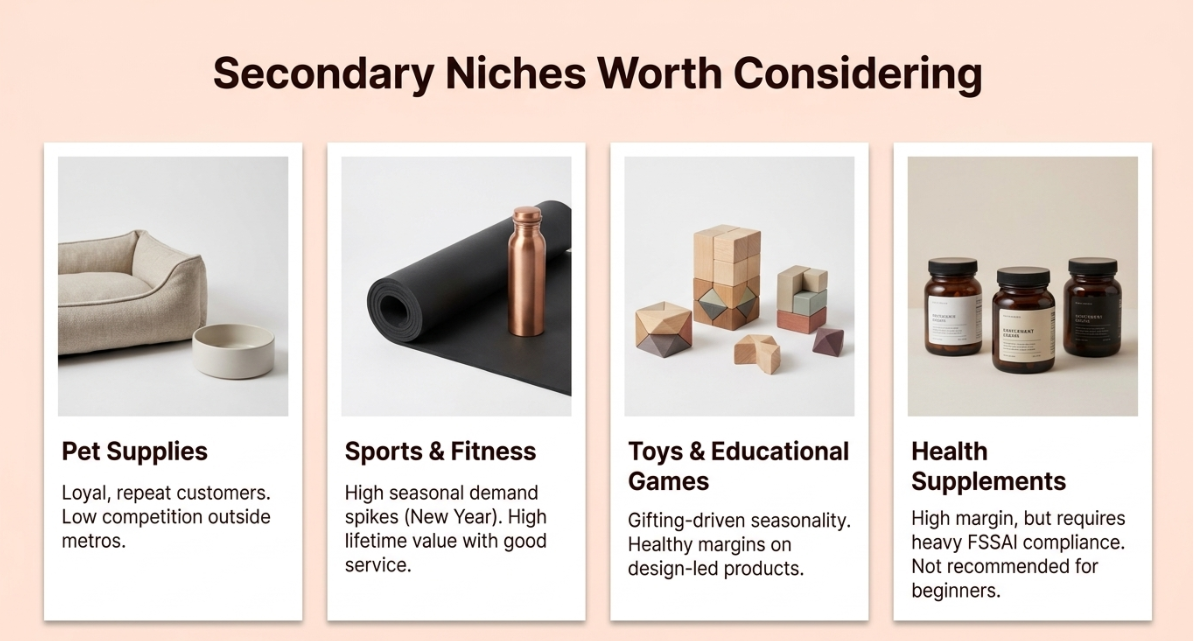
6. Other Niches Worth Considering
These didn't make the top five, but each has a viable path for the right seller:
- Pet supplies — Smaller market, but loyal, repeat-purchasing customers and relatively low competition outside metro areas.
- Sports and fitness gear — Seasonal demand spikes (New Year, festive season) and above-average customer lifetime value when service is good.
- Toys and educational games — Gifting-driven seasonality (festivals, birthdays) with healthy margins on design-led or educational products.
- Health supplements — High margin potential but heavy regulatory scrutiny (FSSAI compliance); not recommended for first-time dropshippers.
Niche Comparison at a Glance
| Niche | India Market Size (2025 est.) | Growth Rate | Margin Potential | Key Risk |
|---|---|---|---|---|
| Fashion, Apparel & Lingerie | ~$6–8B (lingerie segment) | 8–12% CAGR | High (private label) | Sizing-driven returns |
| Jewelry & Accessories | ~$94–95B (mostly gold/bridal) | 5–7% CAGR | High (fashion jewelry only) | Hallmarking compliance (precious metals) |
| Beauty & Personal Care | ~$25–40B | 6–12% CAGR | Moderate–High | Very high competition; cosmetics regulation |
| Home Decor & Living | ~$6–27B (scope-dependent) | 9–11% CAGR | Moderate | Breakage, shipping cost |
| Electronics & Mobile Accessories | Data inconsistent across sources | High demand, fast-moving | Low–Moderate | BIS certification, counterfeits |
How to Validate a Niche Before You Commit
- Check real demand, not assumed demand — Google Trends, marketplace bestseller rankings, and social commerce signals (Instagram/Facebook Shop saves and shares) tell you more than personal intuition.
- Price out the full landed cost — supplier price, packaging, shipping, returns, and platform fees, not just the wholesale cost.
- Talk to a supplier before listing anything — ask about average return rates, dispatch times, and whether they support COD, which still drives a large share of Indian online apparel and accessories sales.
- Start narrow, then expand — a tightly defined sub-niche (e.g., "plus-size shapewear" rather than "women's clothing") is easier to market and rank for than a broad category.
- Re-check your niche every quarter — demand and supplier quality shift; what worked in January doesn't always hold by year-end, particularly around festive-season spikes.
Frequently Asked Questions
What is the most profitable dropshipping niche in India in 2026? Fashion and apparel, particularly lingerie and nightwear, currently offers the strongest combination of market size, repeat-purchase behavior, and achievable margins for Indian dropshippers, especially when sourced through private-label or in-house manufacturing.
Is lingerie a good niche for dropshipping in India? Yes — it combines high repeat-purchase rates with strong margins on private-label products, though sizing-related returns are a known challenge that good supplier sizing charts can reduce. For more detail, see our full breakdown of lingerie as a dropshipping niche.
Which dropshipping niche has the lowest competition in India right now? Tightly defined apparel sub-niches (plus-size, maternity, adaptive wear) and curated home decor segments tend to have lower competition than broad categories like generic beauty products or mobile accessories, which are heavily saturated.
Do I need certifications to dropship electronics or beauty products in India? Yes, in both cases. Electronics require BIS certification for many product categories, and cosmetics fall under the Drugs and Cosmetics Rules governing labeling and ingredient disclosure. Verify your supplier's compliance documentation before listing products in either category.
How do I pick between two profitable niches? Compare landed cost (not just wholesale price), realistic margin after shipping and returns, and supplier reliability — not just market size. A smaller niche with a 40% margin and a reliable supplier usually outperforms a larger niche with 15% margins and inconsistent fulfillment.
Conclusion
The "most profitable" dropshipping niche isn't a fixed list — it's the niche where market demand, your margin structure, and supplier reliability line up. For most Indian dropshippers in 2026, that's still fashion and apparel, with lingerie and daywear leading on repeat-purchase economics, followed by fashion jewelry and beauty as strong secondary categories. Whichever niche you choose, validate it with real data before committing inventory — even in a no-inventory model, your time and ad budget are still capital at risk. Explore Snazzyway Dropshipping full product catalog to see live demand data across these categories before you decide.