What a Good Dropshipping Dashboard Should Show (And Why Most Don’t)
Dropshipping didn’t become difficult because of competition.
It became difficult because most sellers don’t have visibility .
Orders come in.
Ads keep running.
But sellers still feel confused, stressed, and unsure about money.
That confusion usually comes from one place:
👉 A weak dashboard.
Most dropshipping dashboards look busy, but they don’t answer the questions that actually matter.
Most dropshipping dashboards look busy, but they don’t answer the questions that actually matter.
This blog explains:
- what a good dropshipping dashboard should really show
- how a structured dropshipping system works
- where most dashboards fall short
- and how better visibility leads to calmer, more profitable decisions
Why dashboards matter more than products in 2026
In the early days of dropshipping, sellers focused only on:
- finding products
- running ads
- pushing volume
That approach doesn’t work anymore.
Today, sellers need clarity on
- deliveries vs returns
- COD flow
- payout cycles
- product performance
- location-wise demand
- visibility-focused dropshipping platforms
Without this clarity, growth feels risky.
A good dashboard doesn’t excite you.
It keeps you in control .
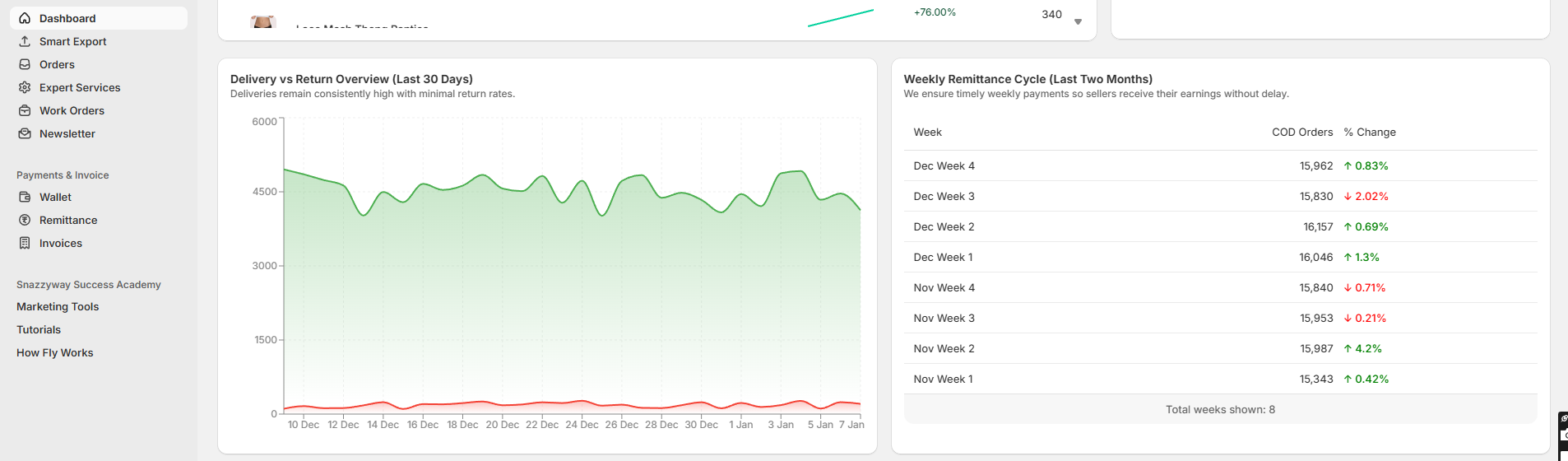
1- Delivery vs Returns: the first metric that matters
Many dashboards proudly show:
- total orders
- total revenue
But they quietly hide returns.
That’s dangerous.
What a good dashboard shows
- delivered orders clearly
- returned orders separately
- trends over time (not just totals)
Because:
- high order count with high returns = fake growth
- stable deliveries with low returns = real business
When sellers can see delivery vs return trends , they stop guessing and start fixing problems early.
Most dashboards don’t show this clearly.
They show numbers — not patterns.
2- COD visibility: where most sellers lose money silently
In India, Cash on Delivery (COD) is still a major payment method.
But COD also creates confusion:
- which orders are collected?
- which are pending?
- which are already remitted?
What a good dashboard should show
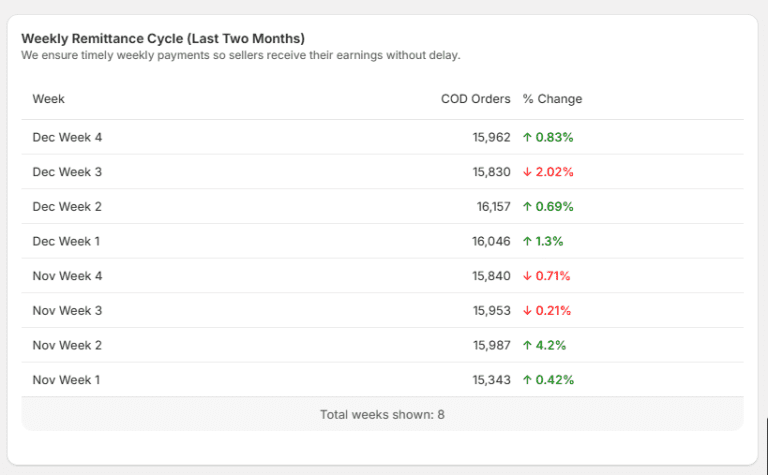
- COD orders week by week
- % increase or drop
- clear status of collected vs pending
When COD visibility is missing:
- sellers feel like money is “stuck”
- planning becomes impossible
- trust breaks down
A proper dashboard makes COD predictable — not stressful.
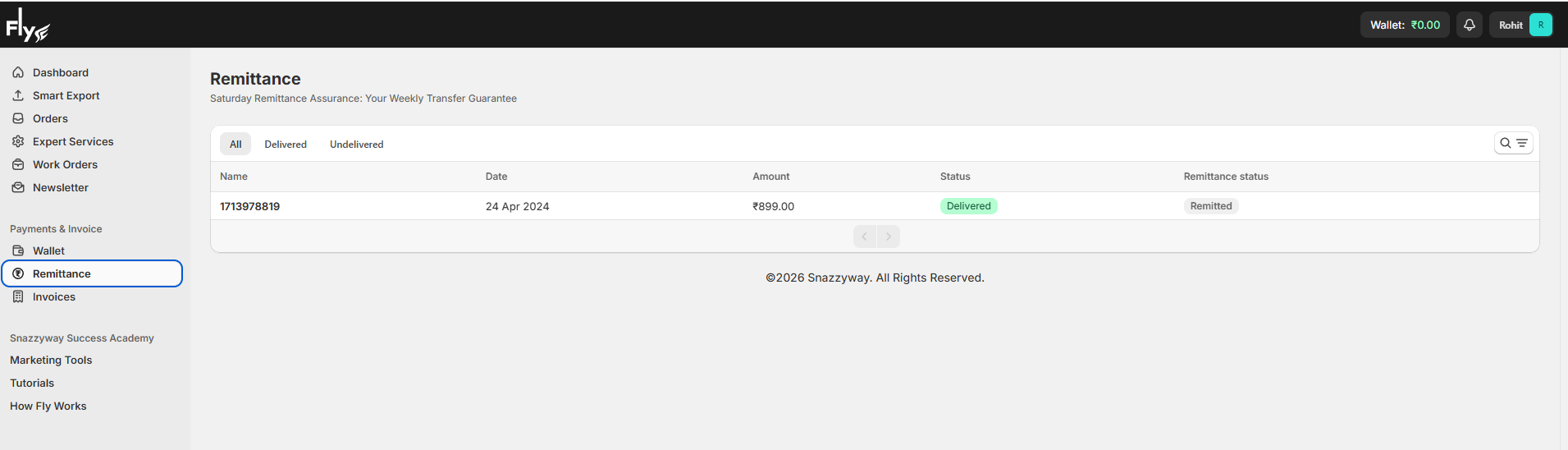
3- Weekly payout clarity (not “we’ll update you soon”)
One of the biggest complaints in dropshipping is:
“I don’t know when I’ll get paid.”
A good dashboard removes that anxiety.
What it should clearly show
- weekly remittance cycles
- order volume per week
- percentage change week-on-week
When sellers can see payouts in advance , they:
- plan ads better
- manage cash flow
- scale without panic
Most dashboards either hide this data or spread it across multiple screens.
That creates confusion — not confidence.
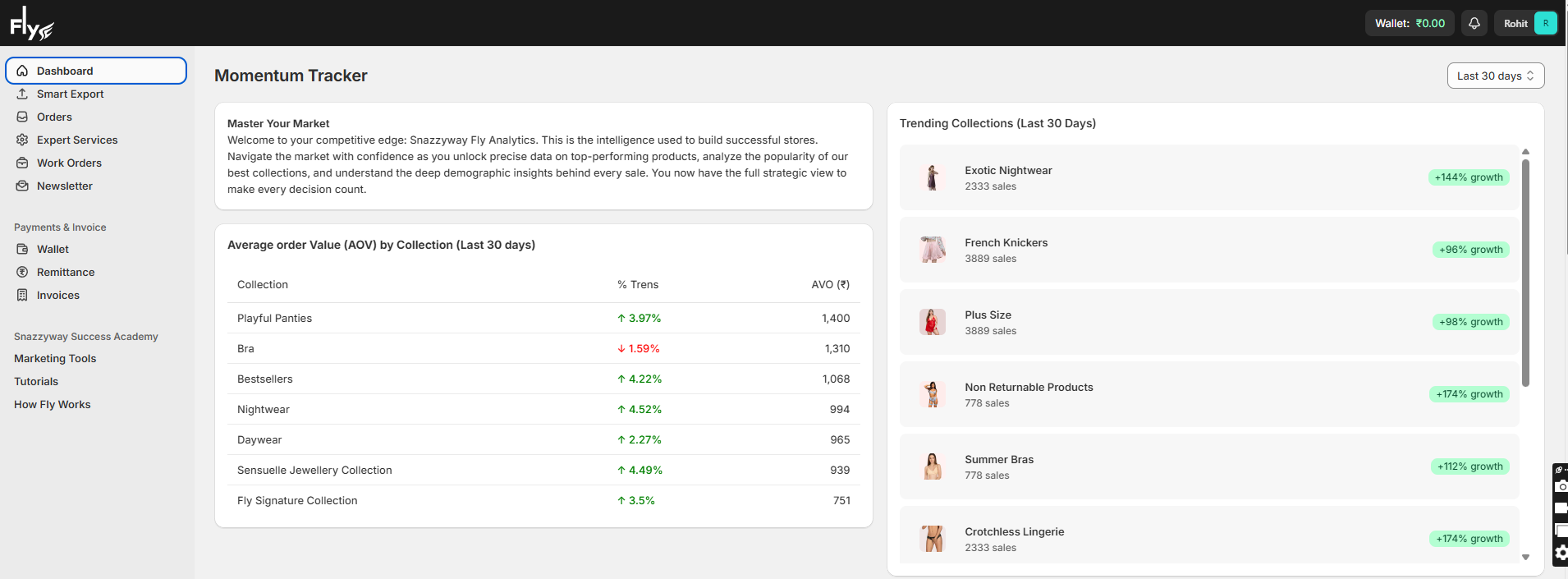
4-Product-level performance (not just “best sellers”)
Almost every platform shows “top products”.
But a good dashboard goes deeper.
It should show
- daily product trends
- quantity sold
- growth percentage
- products trending up vs trending down
- products that show consistent demand
This helps sellers answer:
- which products deserve more ads
- which products should be paused
- which collections are gaining momentum
Without this, sellers rely on instinct instead of data.
And instinct doesn’t scale.
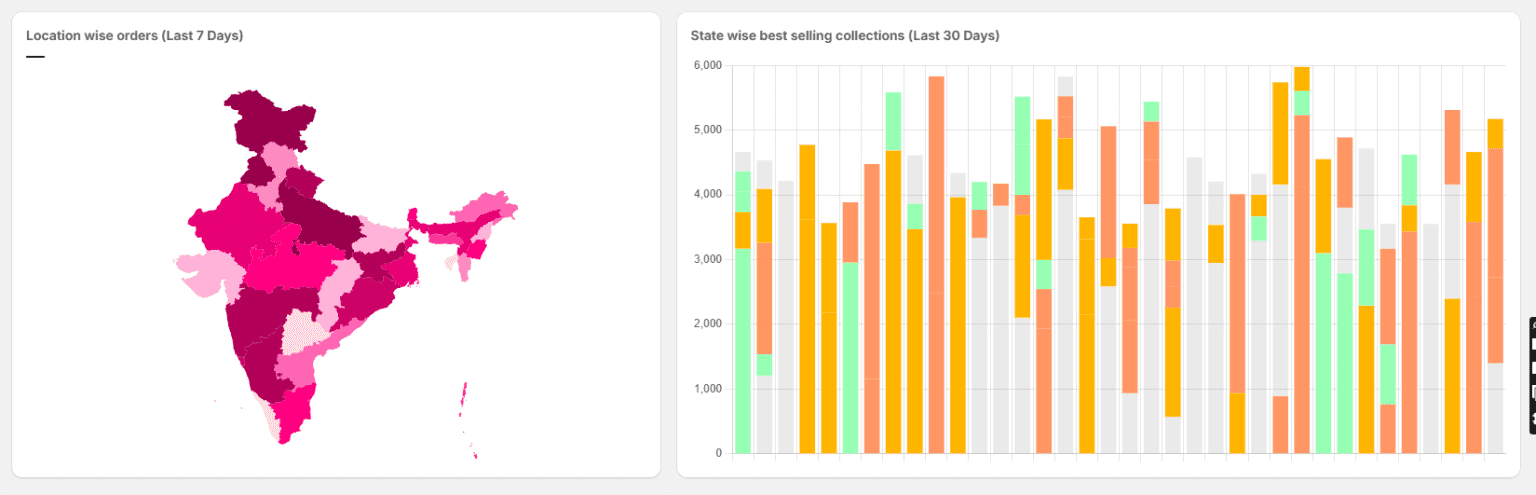
5-Location-wise demand (especially important in India)
India is not one market.
Buying behaviour in:
- Delhi
- Maharashtra
- Tamil Nadu
- Tier-2 and Tier-3 cities
…is very different.
A strong dashboard shows
- state-wise orders
- location heatmaps
- regional demand patterns
This helps sellers:
- optimise shipping
- adjust creatives
- plan inventory smarter
Most dashboards ignore geography.
That’s a missed opportunity.

6-Order status clarity (no hidden surprises)
Many sellers only realise problems when customers start complaining.
A good dashboard shows:
- pending orders
- shipped orders
- returns
- cancelled orders
All in one place.
This prevents:
- delayed responses
- support chaos
- brand damage
Clarity here saves both time and reputation.
Why most dropshipping dashboards fail
Most dashboards are built to:
- look impressive
- show big numbers
- sell features
They are not built to:
- reduce stress
- improve decision-making
- show uncomfortable truths (like returns)
That’s why sellers often feel:
- busy but not confident
- active but not in control
What a good dashboard actually does
A good dropshipping dashboard:
- feels calm
- answers boring but important questions
- makes growth predictable
It doesn’t shout success.
It quietly supports it.
Where Fly fits into this (soft truth)
Fly was built after observing one pattern again and again:
Sellers didn’t fail because of low orders.
They failed because they couldn’t see what was happening
So Fly focuses on:
- delivery vs return visibility
- COD clarity
- weekly remittance tracking
- product and location insights
- clean, readable analytics
- operational training for serious sellers
Not to impress.
But to help sellers sleep better and scale smarter .
This is exactly why Fly was built.
Your Questions Answered
Delivery vs return rate.
High orders do not matter if returns are high.
Because COD affects cash flow.
Without COD clarity, sellers cannot plan ads or payouts confidently.
Yes. Early mistakes are cheaper to fix when visibility is clear from day one.
Indirectly, yes.
Better visibility leads to faster decisions, fewer surprises, and lower operational risk.
Absolutely.
Clarity beats complexity every time.