Why Dropshipping Platforms Are Failing — And Infrastructure Is Winning in 2026
Dropshipping is not dead in 2026 — weak dropshipping platforms are .
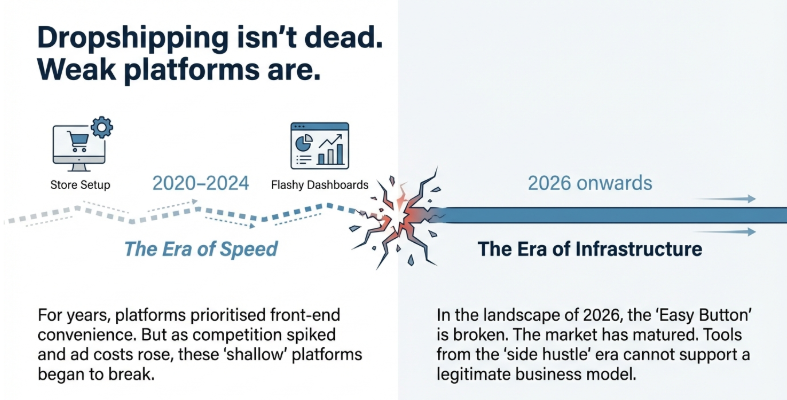
For the last few years, most platforms focused only on front-end convenience: quick store setup, product import, and flashy dashboards. But as competition increased, ads became expensive, and customer expectations went up, these shallow platforms started breaking.
Today, infrastructure is winning .
This blog explains:
- Why traditional dropshipping platforms are failing
- What “dropshipping infrastructure” really means
- Why brands that survive 2026 are infrastructure-backed
- How Snazzyway Dropshipping is built differently
The Real Reason Dropshipping Platforms Are Failing
Most dropshipping platforms were built for speed , not scale .
They helped beginners start fast — but failed when businesses grew.
Common Problems With Old-Style Platforms
These platforms treat dropshipping as a side hustle, not a business system.
Infrastructure Is Winning — Here’s Why
Infrastructure is not a tool.
Infrastructure is a foundation .
It includes:
- Technology
- Supply chain
- Brand systems
- Automation
- Education
- Scalability
When infrastructure is strong, marketing becomes easier, margins improve, and growth becomes predictable .
Why Snazzyway Is Built as Infrastructure, Not Just Another Dropshipping Platform
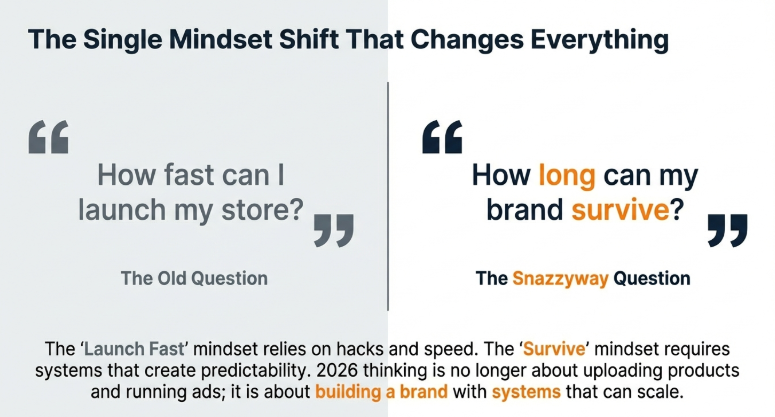
Most platforms ask:
“How fast can we launch your store?”
Snazzyway asks:
“How long can your brand survive?”
That single mindset shift changes everything.
What Makes Snazzyway Infrastructure-First?
From Platform Thinking to Business Thinking
Old thinking:
“Upload products and run ads.”
2026 thinking:
“Build a brand with systems that can scale.”
Snazzyway supports this shift by offering multiple connected layers , not just a dashboard.
Example: How Infrastructure Changes Outcomes
Technology Is Not Enough Without Structure
Many platforms claim:
“We have AI, automation, and dashboards.”
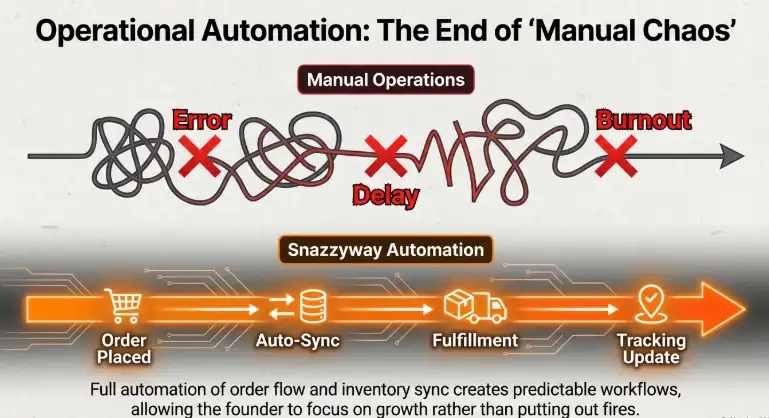
But tech without structure is chaos.
Snazzyway combines technology + process + education, which is why it works as infrastructure.
You don’t just get tools — you get a system that tells you how to use them .
Where Internal Systems Matter Most
Here are areas where infrastructure decides success:
1. Product Strategy
Not every product is meant for ads.
Snazzyway focuses on tested categories and controlled catalogs .
(Related reading: Best products for dropshipping in India )
2. Branding & Differentiation
Infrastructure allows:
- Private label
- White label
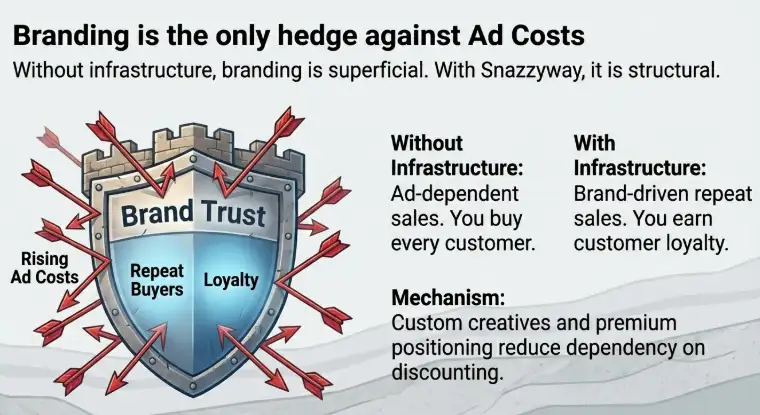
- Custom creatives
This reduces dependency on discounts.
(Explore: Private label & white label dropshipping solutions )
3. Automation
Order flow, inventory sync, and fulfillment automation reduce human error and scale smoothly.
(See: Fly: the most advanced dropshipping platform in India )
4. Education & Execution
Platforms fail users by saying “figure it out.”
Snazzyway adds structured learning and execution frameworks.
(Learn more: Snazzyway Success Academy)
Why Infrastructure Beats Platforms in 2026 (Summary Table)
Who Should Choose Infrastructure-Based Dropshipping?
Infrastructure is ideal for:
- Serious founders
- Brand-first sellers
- Long-term entrepreneurs
- People tired of “trial & error dropshipping”
If your goal is real business , infrastructure is non-negotiable.
Internal Resources (Recommended Reading)
To understand the system better, explore:
The Future of Dropshipping Belongs to Builders, Not Hackers
Dropshipping hacks fade.
Ad tricks expire.
Platforms come and go.
Infrastructure stays.
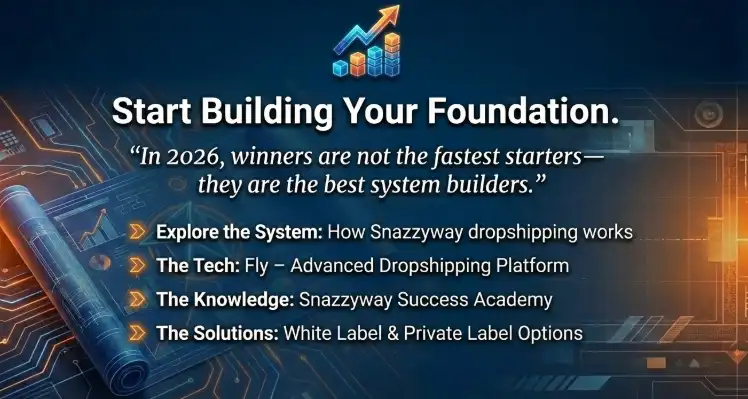
In 2026, winners are not the fastest starters —
they are the best system builders .
Snazzyway doesn’t promise shortcuts.
It provides foundation .
And foundation is what winning businesses are built on.
Your Questions Answered
Yes, but success now depends on strong infrastructure, branding, and automation. Basic platform-only models without operational support are becoming less effective.
Many platforms focus only on tools instead of building complete systems. Without proper branding support, operational structure, and scalable processes, sellers struggle to sustain long-term growth.
Dropshipping infrastructure refers to a complete ecosystem that includes technology, supply chain management, branding capabilities, automation tools, and educational resources rather than just a simple store builder.
In many cases yes. Private label strategies help improve profit margins, strengthen brand identity, and increase customer trust and recall.
Yes. Beginners often benefit more from structured infrastructure because it helps avoid common operational mistakes and provides clearer systems for scaling.