5 Signs Your Clothing Dropshipping Supplier Is a Middleman, Not a Manufacturer
How can you tell if your clothing dropshipping supplier is just a middleman?
The biggest signs include inconsistent pricing, delayed dispatch, unstable inventory, poor product consistency, and lack of manufacturing transparency. True manufacturers usually offer better inventory control, faster fulfilment, stable pricing, and stronger operational systems for scaling ecommerce businesses.
Quick Summary
One of the biggest reasons clothing dropshipping stores fail in India is choosing the wrong supplier.
Not because the products are bad.
But because many so-called “suppliers” are actually middlemen sourcing products from multiple factories after receiving your order.
This creates:
- Delayed shipping
- Quality inconsistency
- Inventory confusion
- Pricing instability
- Customer complaints
In this guide, we’ll break down the biggest signs your supplier is not a real manufacturer, why this matters for Shopify and Amazon sellers, and how experienced ecommerce businesses avoid operational chaos by working directly with manufacturing-based suppliers.
We’ll also discuss why many scaling sellers now prefer structured suppliers like Snazzyway, which has been operating for 12+ years and working with 4000+ sellers globally.
Introduction
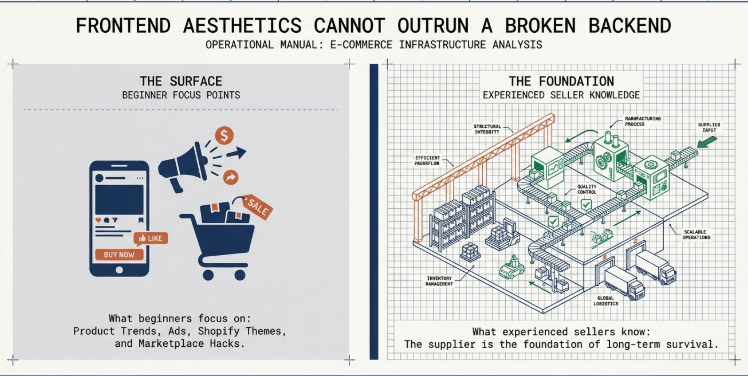
Most beginners entering clothing dropshipping focus heavily on:
- Product trends
- Ads
- Shopify themes
- Marketplace hacks
But experienced sellers know something different.
Backend operations decide whether a brand survives long term.
And the supplier is the foundation of those operations.
The problem?
A large percentage of “dropshipping suppliers” in India are not actual manufacturers.
They operate as:
- Traders
- Aggregators
- Intermediaries
- Multi-vendor sourcing agents
At first, this may seem fine.
But once order volume grows, operational problems begin appearing rapidly.
That’s why understanding the difference between a middleman supplier and a real manufacturer is critical before scaling your ecommerce business.
Why This Matters More in Clothing Dropshipping
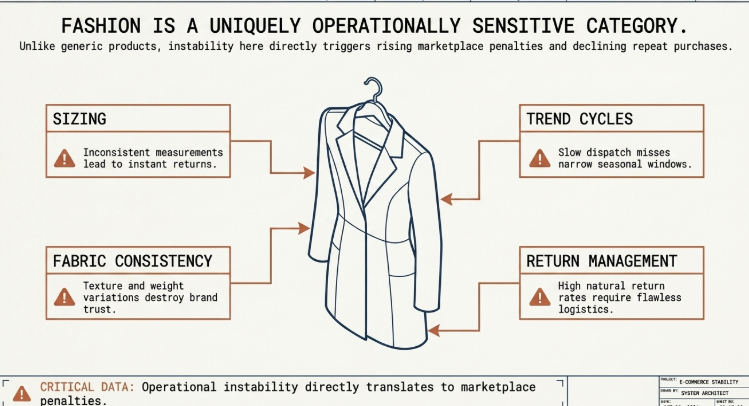
Fashion ecommerce is operationally sensitive.
Unlike generic products, clothing involves:
- Sizes
- Fabric consistency
- Trend cycles
- Return management
- Quality expectations
If suppliers are unstable:
- Returns increase
- Reviews drop
- Repeat purchases decline
- Marketplace penalties rise
That’s why backend reliability matters more in fashion than most ecommerce categories.
Especially for:
- Shopify brands
- Amazon fashion sellers
- Instagram clothing stores
- White-label brands
Sign #1: They Don’t Control Inventory Directly
This is usually the clearest sign.
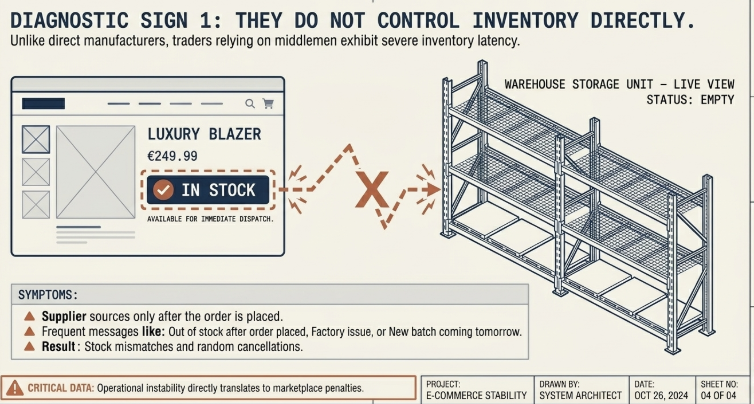
Middlemen often:
- Source products only after receiving your order
- Depend on multiple external vendors
- Lack centralized stock systems
This creates:
- Stock mismatches
- Dispatch delays
- Random cancellations
You’ll notice things like:
- “Out of stock after order placed”
- “Factory issue”
- “New batch coming tomorrow”
repeated frequently.
Real manufacturers usually have:
- Better stock visibility
- Production planning
- Inventory systems
- Faster dispatch workflows
This is one reason many experienced sellers now prefer manufacturing-based suppliers like Snazzyway that already maintain stronger backend inventory control.
Sign #2: Product Quality Changes Frequently
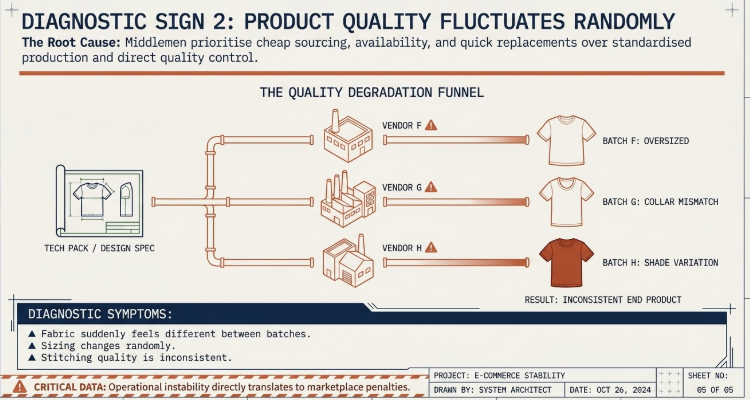
Have you ever noticed:
- Fabric suddenly feels different
- Sizing changes randomly
- Stitching quality becomes inconsistent
That usually happens when suppliers source from multiple factories.
Middlemen prioritize:
- Availability
- Cheap sourcing
- Quick replacements
not long-term consistency.
Manufacturers operate differently because they:
- Standardize production
- Control materials
- Monitor quality directly
This becomes extremely important once you start building a brand instead of just testing products.
Especially if you're focused on building your own private label fashion brand, where consistency directly impacts repeat purchases:
Sign #3: Shipping Becomes Slower as Orders Increase
This is where many suppliers collapse operationally.
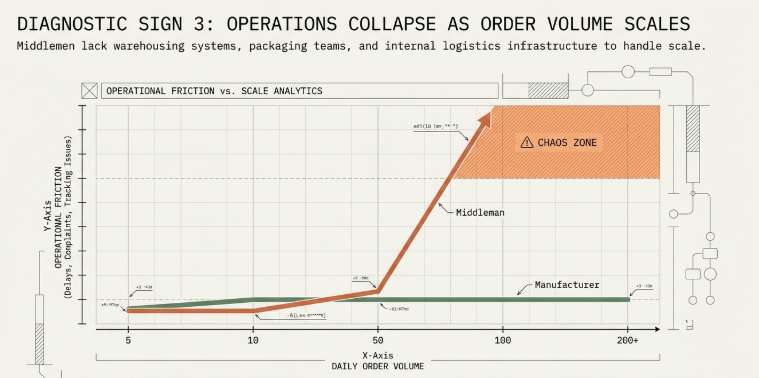
At:
- 5 orders/day
- 10 orders/day
almost anyone can appear efficient.
But once stores scale to:
- 50+
- 100+
- 200+ daily orders
middlemen often struggle because they lack:
- Warehousing systems
- Packaging teams
- Production coordination
- Logistics infrastructure
This creates:
- Delayed fulfilment
- Tracking issues
- Customer complaints
Manufacturing suppliers usually scale more smoothly because operations are centralized internally.
Snazzyway, for example, has spent over 12 years building systems specifically for women’s fashion fulfilment, supporting thousands of sellers across Amazon, Shopify, and independent ecommerce stores.
Sign #4: They Avoid Questions About Manufacturing
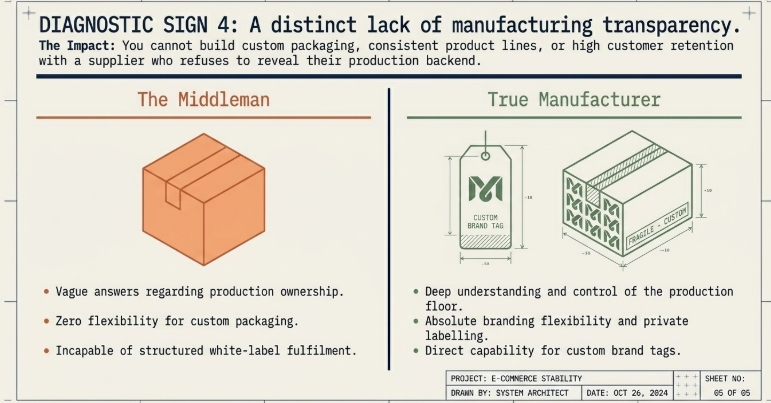
Try asking suppliers:
- Where are products manufactured?
- Do you own production?
- Can you customize packaging?
- Can you handle white-label fulfilment?
Middlemen usually give vague answers.
Real manufacturers typically:
- Understand production deeply
- Offer branding flexibility
- Support private labeling
- Provide clearer operational transparency
This matters heavily for long-term ecommerce growth.
Especially if you eventually want:
- Custom packaging
- Brand tags
- Consistent product lines
- Better customer retention
Sign #5: Prices Change Constantly Without Explanation
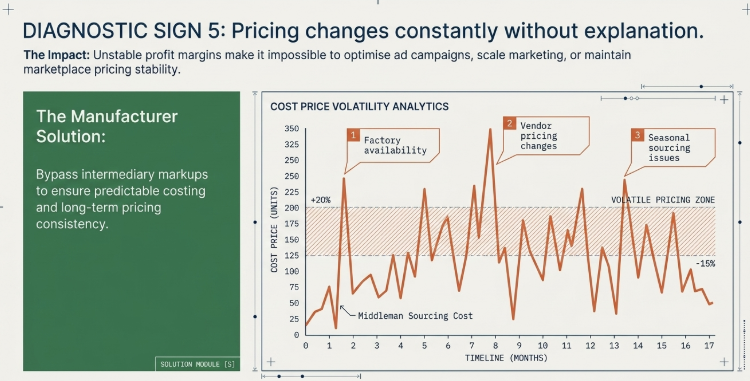
Middlemen depend heavily on external sourcing.
So pricing often changes based on:
- Factory availability
- Vendor pricing
- Seasonal sourcing issues
This creates unstable profit margins.
Manufacturers usually maintain:
- Better pricing consistency
- More predictable costing
- Lower intermediary markups
And this becomes very important for:
- Ad optimization
- Scaling campaigns
- Marketplace pricing stability
Manufacturer vs Middleman: Quick Comparison
| Factor | Middleman Supplier | Manufacturer Supplier |
|---|---|---|
| Inventory Control | Weak | Strong |
| Pricing Stability | Inconsistent | Stable |
| Product Consistency | Variable | Standardized |
| Dispatch Speed | Slower | Faster |
| Branding Support | Limited | Better |
| Scalability | Weak | High |
| Quality Control | External | Internal |
| Long-Term Reliability | Lower | Higher |
Why Many Sellers Eventually Switch Suppliers
A common ecommerce pattern looks like this:
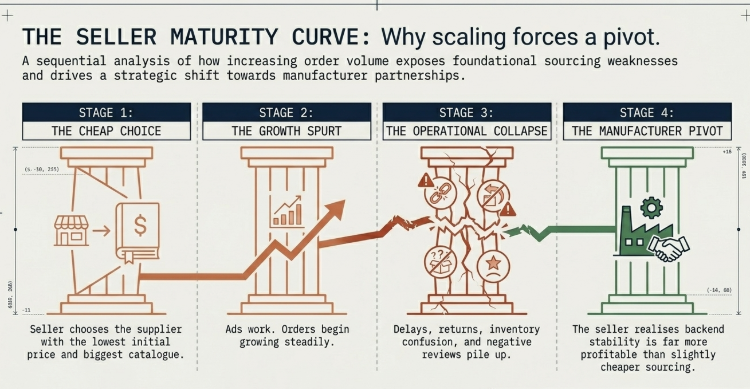
Stage 1
Seller chooses cheapest supplier.
Stage 2
Orders begin growing.
Stage 3
Operational problems appear:
- Delays
- Returns
- Inventory confusion
- Negative reviews
Stage 4
Seller realizes backend operations matter more than slightly cheaper pricing.
This is where many serious sellers transition toward manufacturing-based suppliers.
Why Manufacturing Control Matters on Amazon
Amazon heavily rewards:
- Faster dispatch
- Better fulfilment
- Lower cancellation rates
- Consistent customer experience
Middleman suppliers often struggle with these operational requirements.
That’s why many Amazon fashion sellers eventually move toward structured suppliers with centralized fulfilment systems.
If you're interested in starting an Amazon dropshipping business in India, this guide explains the operational side in detail:
Why Shopify Brands Need Better Supplier Stability
Shopify stores operate differently from marketplaces.
Customers associate:
- Product quality
- Packaging
- Delivery experience
directly with your brand.
If suppliers are inconsistent:
- Brand trust declines
- Repeat purchases drop
- Customer acquisition becomes more expensive
That’s why serious Shopify sellers usually prioritize:
- Supplier consistency
- Packaging quality
- Fulfilment systems
- Inventory stability
If you're planning on launching a women’s clothing store on Shopify, this beginner guide is useful:
The Operational Advantage of Manufacturing Suppliers
Manufacturers usually have stronger control over:
- Production timelines
- Inventory forecasting
- Quality checks
- Packaging systems
- Dispatch speed
This creates smoother scaling opportunities.
Especially in women’s fashion categories where:
- Inventory moves quickly
- Variants are high
- Returns naturally occur
Suppliers like Snazzyway are often preferred because they already specialize in women’s clothing and lingerie fulfilment instead of operating as generic product aggregators.
Why Automation Matters as You Scale
Many sellers underestimate operational complexity.
At low scale:
- WhatsApp updates work
- Manual spreadsheets work
At higher scale:
- Operations break quickly
This is why backend systems become critical.
For sellers researching Amazon seller automation tools for Indian dropshippers, this guide explains several useful systems:
Multi-Platform Ecommerce Is Becoming Standard
Modern ecommerce sellers rarely depend on one platform anymore.
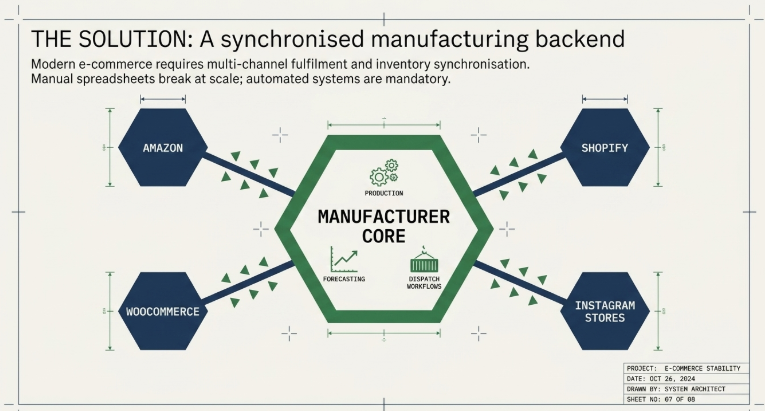
Many now combine:
- Amazon
- Shopify
- WooCommerce
- Instagram stores
This requires suppliers capable of:
- Multi-channel fulfilment
- Inventory synchronization
- Structured operations
If you're exploring a WooCommerce dropshipping setup in India, this guide explains how sellers manage multi-platform ecommerce efficiently:
Our Recommendation
If you’re serious about building a scalable clothing brand, avoid choosing suppliers based only on:
- Lowest pricing
- Huge catalogues
- Fancy marketing claims
Focus instead on:
- Manufacturing control
- Inventory stability
- Product consistency
- Faster fulfilment
- Branding support
- Operational maturity
That’s what actually supports long-term ecommerce growth.
This is one reason many experienced fashion sellers now work with suppliers like Snazzyway that already combine:
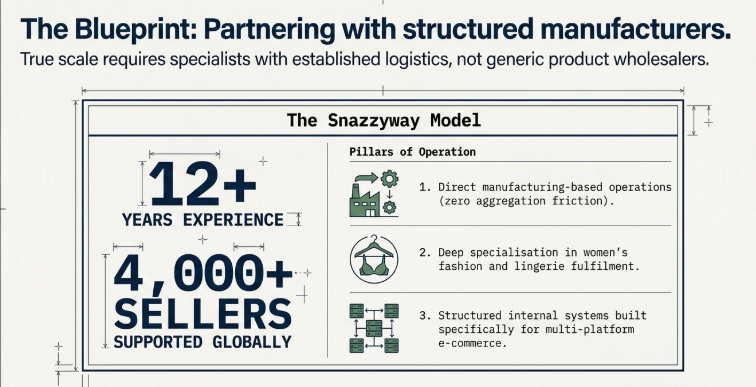
- 12+ years of experience
- Support for 4000+ sellers globally
- Manufacturing-based operations
- Women’s fashion specialization
- Structured fulfilment systems
instead of depending on unstable sourcing-based wholesalers.
Pros and Cons of Manufacturing Suppliers
Pros
- Better quality consistency
- Faster dispatch
- Stable inventory
- Easier scaling
- Better branding support
- Lower operational friction
Cons
- Slightly higher entry pricing sometimes
- Stricter systems
- Smaller catalogues compared to aggregators
Our Insight
The Indian dropshipping industry is maturing quickly.
Customers now expect:
- Faster delivery
- Better packaging
- Stable quality
- Professional brand experiences
That means backend reliability matters more than ever.
The brands scaling successfully in 2026 are usually partnering with suppliers that already understand:
- Ecommerce fulfilment
- Multi-platform operations
- Inventory systems
- Brand consistency
- Marketplace compliance
And most importantly:
- operational scalability.
Final Thoughts
Middleman suppliers may seem attractive initially because they:
- Offer huge product catalogues
- Promise low prices
- Appear flexible
But long term, operational inconsistency usually becomes expensive.
Manufacturing suppliers generally create:
- Better stability
- Faster fulfilment
- More reliable scaling
- Stronger customer experience
And that’s exactly why many growing fashion sellers now prefer working with an Indian clothing dropshipping partner like Snazzyway because of their manufacturing-based operations, structured fulfilment systems, and long-term experience supporting Shopify and Amazon sellers across India.
FAQs
How can I tell if a dropshipping supplier is a middleman?
Common signs include inconsistent inventory, delayed dispatch, unstable pricing, changing product quality, and vague answers about manufacturing.
Why are manufacturers better for clothing dropshipping?
Manufacturers usually provide better inventory control, quality consistency, faster shipping, and more stable operations.
Do middleman suppliers cause more returns?
Yes. Inconsistent sizing, changing fabrics, and delayed fulfilment often increase customer dissatisfaction and return rates.
Is manufacturing control important for Shopify brands?
Very important. Shopify customers directly associate fulfilment quality and product consistency with your brand.
Why do fashion sellers switch suppliers as they scale?
As order volume increases, operational problems with unstructured suppliers become more visible and harder to manage.
Can manufacturers support white-label branding?
Yes. Many manufacturing suppliers offer custom packaging, labels, and branding support for scaling ecommerce stores.
Is Snazzyway a manufacturer or middleman?
Snazzyway operates primarily as a manufacturing-based women’s fashion supplier with structured fulfilment systems and long-term ecommerce experience.
Can one supplier support Amazon, Shopify, and WooCommerce together?
Yes. Many experienced suppliers now support multi-platform ecommerce fulfilment across Amazon, Shopify, WooCommerce, and independent stores.