How to Run Instagram Ads for Your Fashion & Lingerie Store
This guide was last updated in June 2026 based on current market data.
How do you run Instagram ads for an ecommerce store?
You run Instagram ads by setting up a business account connected to Meta Ads Manager, choosing a campaign objective like conversions or traffic, defining your target audience, and uploading product visuals with a clear call to action. For fashion and lingerie sellers, Instagram works better than most platforms because the format is built around visual product discovery. Start with a small daily budget, test two or three creatives, and scale only what converts.
Quick Summary Box
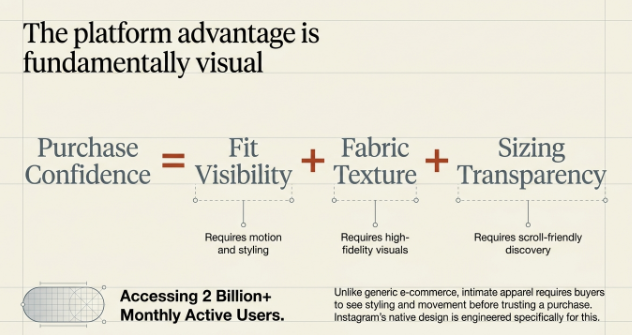
- Instagram has over 2 billion monthly active users globally, and fashion is one of the platform's most-browsed categories, based on industry estimates.
- Reels and Stories ad placements typically get lower cost-per-click than feed-only placements for fashion and apparel products.
- A working starting budget for testing Instagram ads is around ₹300–₹500 per day, similar to Facebook ad minimums.
- Carousel ads outperform single-image ads for lingerie and apparel because they let shoppers see multiple angles, sizes, or colourways in one ad.
- Instagram Shopping tags let customers buy directly from a post, cutting steps out of the buying journey.
- Lookalike audiences built from existing customer lists tend to outperform broad interest targeting for repeat-purchase categories like lingerie.
This guide is for women's fashion and lingerie dropshipping sellers who want to run profitable Instagram ad campaigns without wasting ad spend on the wrong audience or format.
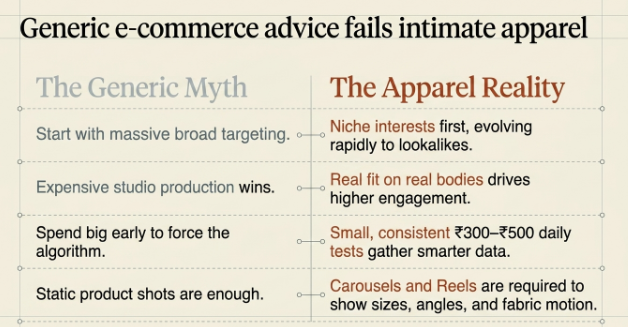
Most Instagram ad guides are written for generic ecommerce or T-shirt brands and don't address what actually matters for fashion and lingerie: visual trust, sizing confidence, and discreet, tasteful creative. This guide walks through setting up Instagram ads specifically for apparel sellers, the ad formats that perform best for this category, and the mistakes that quietly drain ad budgets. By the end, you'll have a clear, repeatable process to launch and scale Instagram campaigns for a fashion store.
Why Instagram Works Better Than Facebook for Fashion Sellers
Instagram is a visual-first platform — a photo and video sharing app where users scroll through curated, image-led content rather than text-heavy posts. For fashion and lingerie specifically, this format advantage matters more than on most other platforms, because buyers need to see fit, fabric texture, and styling before they trust a purchase.
Fashion and beauty consistently rank among the most-engaged content categories on Instagram, and features like Shopping tags, Reels, and Stories were all built around product discovery in a scroll-friendly format. A T-shirt brand might do fine with a static feed image, but lingerie and apparel sellers see meaningfully better engagement from short-form video showing how a product actually looks in motion.
Key takeaway: Instagram's visual format gives fashion and lingerie sellers a natural advantage over text-heavy ad platforms.
Setting Up Your First Instagram Ad Campaign
Meta Ads Manager — the dashboard used to create, manage, and track ads across Facebook and Instagram — is where every Instagram ad campaign gets built, even though you're advertising on Instagram specifically.
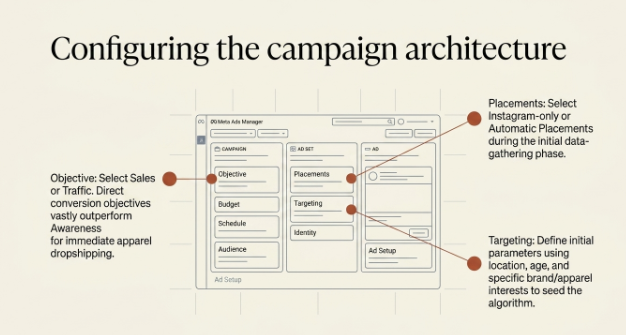
Step-by-Step: Launching an Instagram Ad for Your Fashion Store
- Connect your Instagram business account to your Meta Business Suite and link it to Ads Manager.
- Choose a campaign objective — for a fashion store, "Sales" or "Traffic" objectives usually outperform "Awareness" for direct conversions.
- Define your audience using location, age range, interests (such as "women's fashion," "lingerie," or specific competitor brand names), and behaviours.
- Select Instagram-only placements, or Automatic Placements if you're still testing what performs best.
- Upload your creative — a short Reel or carousel showing the product clearly — along with a direct, benefit-led caption and call to action.
Key takeaway: A correctly configured Ads Manager setup matters more than creative polish in the first few campaigns.
Common Misconception About Instagram Ads
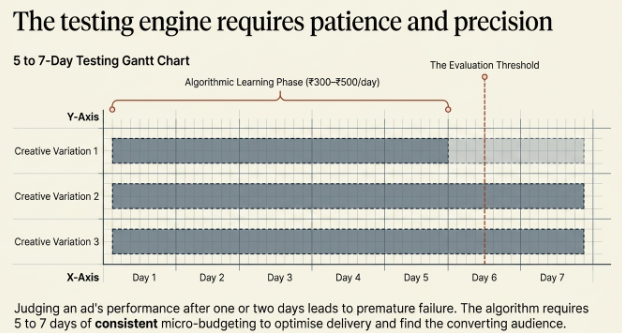
Infographic titled 'The Testing Engine Requires Patience and Precision' showing a 5–7 day advertising testing timeline for fashion e-commerce campaigns. A Gantt chart displays three creative variations running simultaneously across seven days during the algorithmic learning phase with a small daily budget. A marked evaluation threshold appears around Day 6, emphasizing that ads should not be judged after only one or two days. The graphic concludes that consistent micro-budget testing over 5–7 days gives the advertising algorithm enough time to optimize delivery and identify the highest-converting audience.
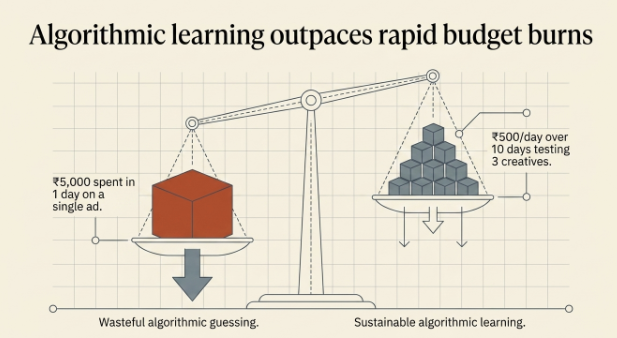
Many people assume Instagram ads only work with a large budget and professional photography. The reality is that consistent, well-targeted testing with modest budgets — even ₹300 to ₹500 a day — often outperforms a single expensive campaign, because Instagram's algorithm needs data from multiple smaller tests to find the audience that actually converts.
Instagram Ad Formats Compared for Fashion Sellers
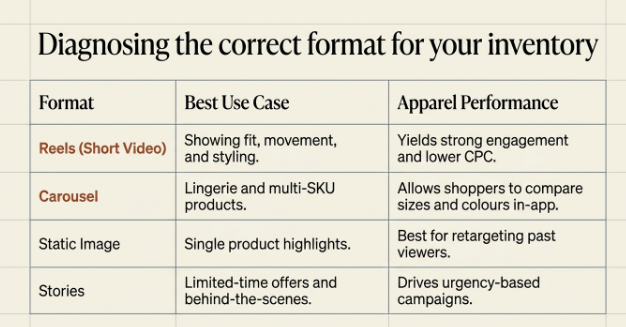
Reels vs Carousel vs Static Image
| Format | Best Use Case | Typical Performance for Fashion |
|---|---|---|
| Reels (short video) | Showing fit, movement, styling | Strong engagement, lower cost-per-click |
| Carousel | Multiple colours, sizes, or angles | High for lingerie and multi-SKU products |
| Static Image | Quick promotions, single product highlight | Lower engagement, best for retargeting |
| Stories | Limited-time offers, behind-the-scenes | Good for urgency-driven campaigns |
For lingerie specifically, carousel ads tend to perform well because shoppers can compare sizes, colours, or sets within a single ad without leaving the platform. Reels, meanwhile, work best for showing how a garment actually fits and moves, which static product photos can't convey.
By the Numbers
- Recommended daily test budget: ₹300–₹500
- Instagram global monthly active users: 2 billion+
- Suggested creative variations per test: 2–3
- Typical testing window before scaling: 5–7 days
- Snazzyway Dropshipping active sellers using social ads to drive sales: thousands, based on our seller data
Avoid This Mistake When Running Instagram Ads
Targeting too broad an audience too early. Many fashion sellers select a generic "women, 18–45, India" audience in their first campaign, which spreads the budget thin across people who were never likely to buy lingerie or apparel in the first place, instead of letting a narrower interest or lookalike audience prove itself first.
Building Audiences That Actually Convert
Audience targeting determines whether your Instagram ad spend turns into sales or just impressions. Three audience types matter most for fashion sellers: interest-based audiences (built from fashion, lingerie, or competitor-brand interests), custom audiences (built from your own customer or website visitor lists), and lookalike audiences (built from people who resemble your existing buyers).
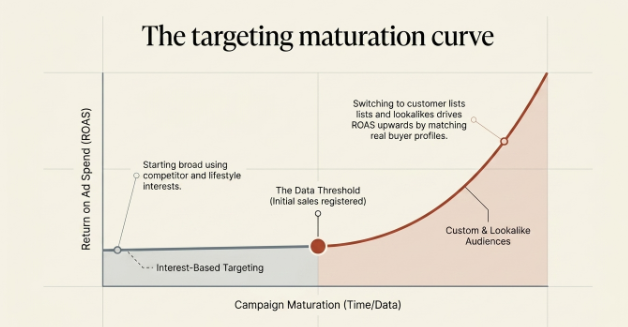
For sellers just starting out, interest-based targeting is the only option since there's no customer data yet. Once even a small number of sales come in, switching toward custom and lookalike audiences usually improves return on ad spend, since Instagram's algorithm has real buyer data to match against rather than guessing from stated interests alone.
Key takeaway: Start broad with interest targeting, then narrow toward lookalike audiences once you have real customer data.
Creative That Performs for Apparel and Lingerie
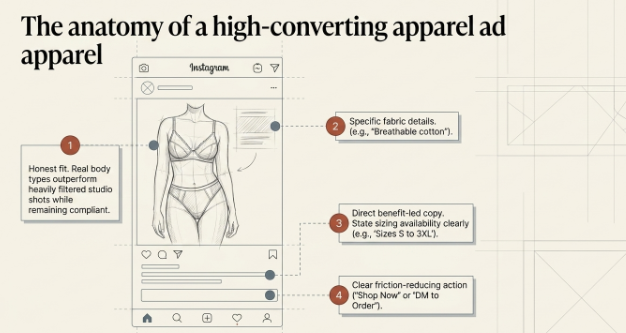
Creative quality on Instagram doesn't mean expensive studio production — it means clarity, honesty about fit, and tasteful presentation that matches the platform's content policies for intimate apparel. Ads showing real fit on real body types, paired with simple text overlays about fabric, sizing, and price, tend to outperform overly staged or heavily filtered shots.
Captions that lead with a clear benefit ("breathable cotton, all-day comfort, sizes S to 3XL") and end with a direct call to action ("shop now" or "DM to order") perform better than vague brand-building language, because Instagram users scrolling through ads respond to specificity over slogans.
Key takeaway: Honest, fit-focused creative converts better than heavily polished but vague brand imagery.
Snazzyway Insight: What We've Learned Running Social Ads for Fashion Sellers
We've supported 4,000+ active sellers across 54 product categories for over 12 years, and a recurring pattern shows up across our seller base: sellers who pair Instagram ads with a reliable supplier catalog scale faster than sellers who run ads against an unreliable or thin product range. When an Instagram ad drives traffic to a product page, the product needs to actually be in stock and shippable fast, or the ad spend is wasted on a broken funnel.
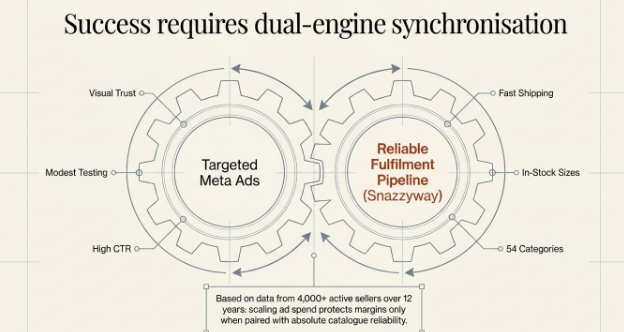
This is one reason we've seen growing interest in Instagram dropshipping in India as a combined strategy — pairing platform-native ad formats with a supplier that can fulfil the resulting orders without delay. Sellers exploring how Snazzyway Dropshipping works often start here before scaling ad spend, since matching supply reliability to ad-driven demand is what actually protects margins.
Connecting Ads to a Reliable Fulfilment Pipeline
Running ads is only half the equation — fulfilment determines whether that traffic turns into repeat customers. Sellers building their store on Shopify often pair their ad campaigns with our guide on how to start dropshipping on Shopify, while sellers running ads to drive marketplace traffic instead look at how to dropship on Amazon.
For sellers wanting their own brand identity to carry through the ad creative and the unboxing experience, white label dropshipping keeps the entire journey — ad, checkout, and delivery — consistent under one brand name. And if you're comparing where to source your catalog from before running ads at scale, our page on how Snazzyway compares with other Shopify suppliers in India is a useful starting point.
Bottom Line
Instagram ads work especially well for fashion and lingerie sellers because the platform's visual format matches how people actually shop for apparel — by seeing fit, fabric, and styling before buying. Start with a modest daily budget, test carousel and Reels formats before static images, and move toward lookalike audiences as soon as real customer data is available. None of it matters, though, if the supplier behind your store can't fulfil the orders your ads generate.
Frequently Asked Questions
1. How much budget do I need to start running Instagram ads?
A starting daily budget of ₹300 to ₹500 is usually enough to begin testing, similar to minimum spends on Facebook. The goal at this stage isn't scale, it's data — finding which audience and creative combination converts before increasing spend. Most sellers run this test budget for 5 to 7 days before deciding whether to scale a specific ad set. Spending more upfront without test data tends to waste budget rather than improve results.
2. Are Instagram ads better than Facebook ads for fashion brands?
Instagram tends to perform better for visually-driven categories like fashion and lingerie because the platform's format is built around image and video discovery rather than text-based content. Facebook can still work, especially for retargeting or reaching slightly older demographics, but Instagram generally sees stronger engagement for apparel. Many sellers run both platforms through the same Meta Ads Manager campaign and let placement data show which performs better for their specific audience.
3. What ad format works best for lingerie on Instagram?
Carousel ads tend to work best for lingerie because they let shoppers browse multiple sizes, colours, or matching sets within a single ad unit. Reels are a close second, especially for showing fit and movement, which static images can't convey. Static single-image ads generally perform weaker for this category and are better suited to retargeting customers who've already viewed a product.
4. How do I target the right audience for a fashion store on Instagram?
Start with interest-based targeting around fashion, lingerie, and relevant lifestyle interests if you don't yet have customer data. Once you have a base of buyers, build custom audiences from your customer list and lookalike audiences from those buyers, since lookalike targeting typically outperforms broad interest targeting once enough purchase data exists. Narrowing audience size gradually, rather than starting broad, tends to protect ad spend in the early stages.
5. Can I sell directly through Instagram ads without a separate website?
Yes, Instagram Shopping tags allow customers to view product details and purchase directly within the app, reducing the steps between seeing an ad and completing a purchase. However, most fashion dropshipping sellers still run ads toward their own Shopify or website store for better order tracking, customer data ownership, and supplier integration. Combining both — Shopping tags for browsing and a full website for checkout — often gives the most flexibility.
6. How long should I test an Instagram ad before deciding if it works?
A testing window of 5 to 7 days is generally enough for Instagram's algorithm to gather meaningful data on a new ad set, provided the daily budget is consistent. Judging an ad's performance after only a day or two often leads to premature decisions, since the algorithm needs time to optimise delivery. After this window, ads with a poor click-through or conversion rate should be paused, and the better-performing creative should receive increased budget.
7. What's the biggest reason Instagram ads fail for new fashion sellers?
The most common reason is mismatched supply and demand — running ads that drive real traffic and interest toward a product catalog that's out of stock, slow to ship, or inconsistent in sizing. Strong ad creative and targeting can't compensate for a fulfilment process that disappoints buyers after the click. Pairing ad campaigns with a reliable, established supplier catalog generally protects the return on ad spend far more than creative tweaks alone.