Indian vs Chinese Clothing Dropshipping Suppliers: Which Is Better for Ecommerce Sellers in 2026?
Quick Answer
Are Indian clothing dropshipping suppliers better than Chinese suppliers?
For most ecommerce sellers in India, especially Shopify and Amazon fashion sellers, Indian clothing dropshipping suppliers are becoming the better long-term choice because they offer:
- Faster shipping
- Easier communication
- Better customer support
- Simpler returns
- Stronger branding opportunities
- Better understanding of Indian fashion buyers
Chinese suppliers still dominate low-cost manufacturing globally, but many sellers now struggle with delayed shipping, inconsistent quality, and weak customer experience.
That’s why many growing fashion brands are now shifting toward more organized Indian fulfillment systems for stable long-term growth.
Introduction
Choosing the right dropshipping supplier is one of the biggest decisions in ecommerce.
A supplier directly affects:
- Delivery speed
- Product quality
- Customer satisfaction
- Return rates
- Brand reputation
- Long-term scalability
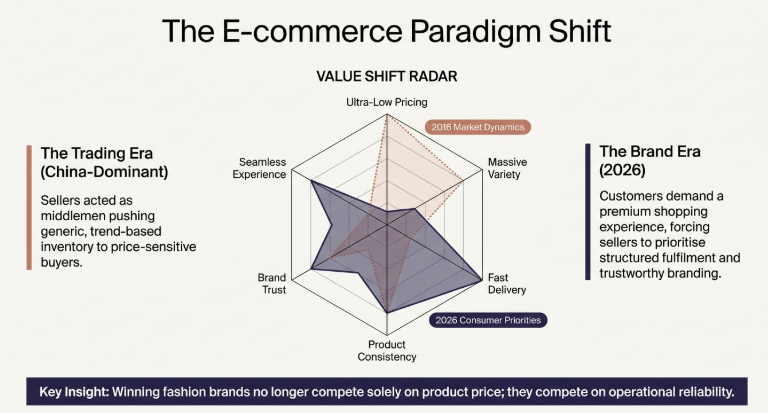
For years, Chinese suppliers dominated the dropshipping industry because they offered low prices and huge product catalogs.
But ecommerce in 2026 is very different.
Customers now care more about:
- Fast delivery
- Product consistency
- Trustworthy brands
- Better shopping experience
This shift is pushing many sellers toward Indian clothing dropshipping suppliers, especially in women’s fashion and lifestyle categories.
Many ecommerce sellers starting their online business through platforms like Shopify now prefer local fulfillment because it simplifies operations and improves customer satisfaction. Sellers looking to build their first fashion store can also learn the basics through this guide on how to start dropshipping on Shopify.
In this blog, we’ll compare Indian vs Chinese clothing dropshipping suppliers in detail so you can choose the best option for your ecommerce business.
Understanding the Difference Between Indian and Chinese Suppliers
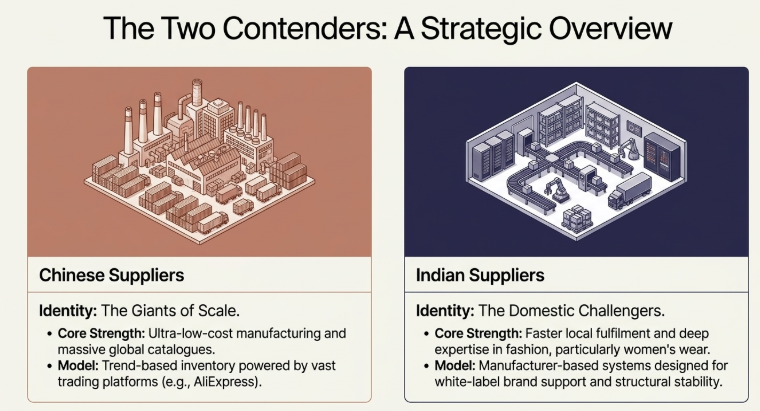
Chinese Clothing Dropshipping Suppliers
Chinese suppliers became globally popular because they offered:
- Extremely low product pricing
- Massive product variety
- Trend-based inventory
- Global shipping access
Platforms like AliExpress helped millions of beginners start dropshipping businesses worldwide.
However, sellers today often face issues like:
- Long delivery times
- Communication delays
- Product inconsistency
- Harder returns
- Branding limitations
Indian Clothing Dropshipping Suppliers
Indian suppliers mainly focus on:
- Domestic ecommerce sellers
- Faster fulfillment in India
- Fashion & women’s wear categories
- White label support
- Easier operational management
In recent years, Indian suppliers have improved significantly in:
- Shopify integration
- Amazon fulfillment
- Custom packaging
- Inventory management
- Faster customer support
Sellers searching for reliable women’s fashion sourcing partners often prefer suppliers with long-term operational experience and stable fulfillment systems. Learn more about clothing dropshipping suppliers in India and how modern fashion fulfillment works.
Indian vs Chinese Suppliers: Complete Comparison
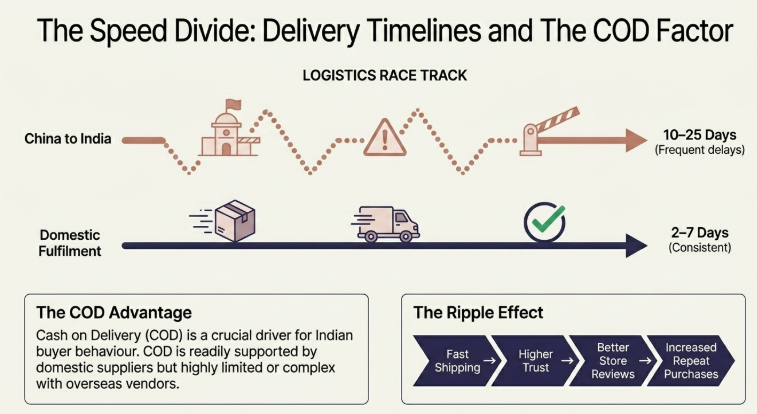
1. Shipping Speed
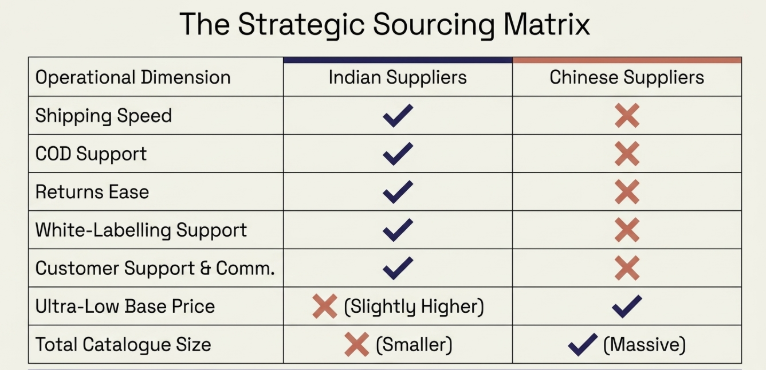
Shipping speed is one of the biggest differences.
| Factor | Indian Suppliers | Chinese Suppliers |
|---|---|---|
| Delivery in India | 2–7 Days | 10–25 Days |
| COD Support | Common | Limited |
| Return Handling | Easier | Complex |
| Domestic Logistics | Strong | Weak |
| Customer Experience | Better | Often Delayed |
Fast shipping improves:
- Customer trust
- Repeat purchases
- Store reviews
- Conversion rates
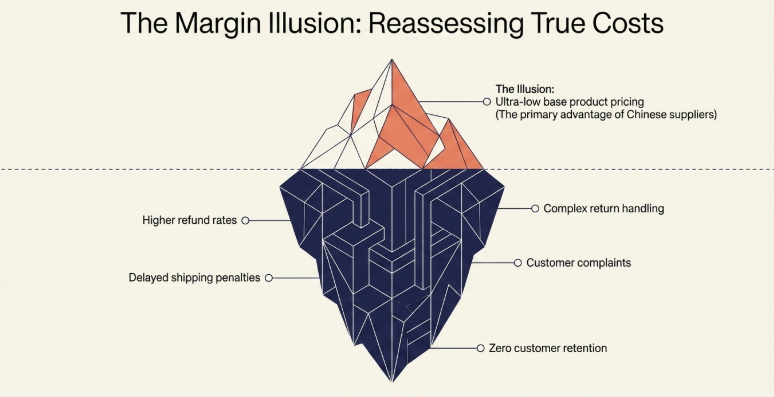
This is why local fulfillment is becoming increasingly important in ecommerce.
Why Indian Clothing Suppliers Are Growing Rapidly
Better Understanding of Indian Buyers
Indian suppliers understand:
- Local sizing standards
- Regional fashion trends
- Seasonal demand
- Festive shopping patterns
- COD-heavy ecommerce behavior
This creates a smoother customer experience.
Especially in women’s fashion, sizing accuracy and product consistency are extremely important.
Easier Communication
Many sellers struggle with overseas supplier communication because of:
- Time-zone differences
- Slow replies
- Language barriers
- Inventory confusion
Indian suppliers usually provide faster and simpler support, making daily operations easier for ecommerce businesses.
Branding & White Labeling Advantages
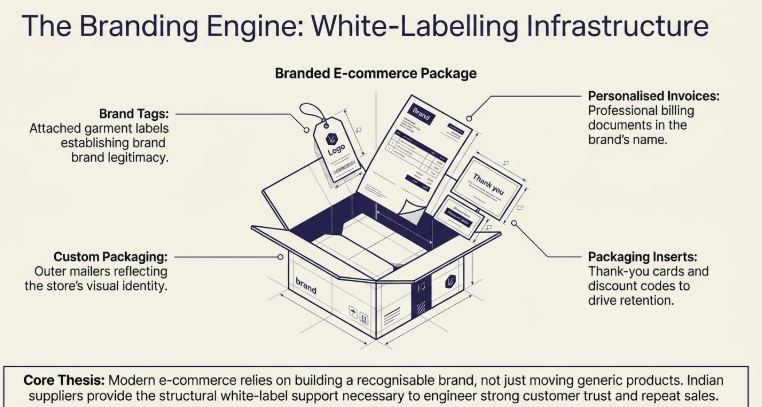
Modern ecommerce is no longer just about selling products.
It’s about building a recognizable brand.
That’s why white label fulfillment is becoming increasingly important.
Indian suppliers often provide:
- Custom packaging
- Brand tags
- Personalized invoices
- Private labeling
- Packaging inserts
This helps ecommerce businesses create stronger customer trust and repeat sales.
Many sellers now focus on building branded stores using structured fulfillment systems instead of depending only on generic marketplace sourcing. Businesses wanting to create a long-term fashion brand can understand this model better through this detailed guide on white label dropshipping.
Product Quality Comparison
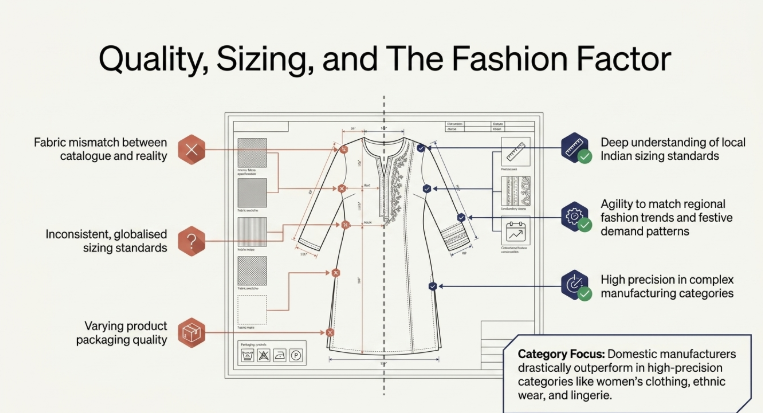
Chinese Suppliers
Chinese suppliers offer huge product variety, but quality consistency can vary significantly.
Common problems include:
- Fabric mismatch
- Different sizing
- Inconsistent packaging
- Product variation
Indian Suppliers
Indian suppliers usually perform better in categories like:
- Women’s clothing
- Lingerie
- Ethnic wear
- Fashion products requiring accurate sizing
Manufacturer-based suppliers often maintain better consistency compared to reseller-based sourcing systems.
For example, Snazzyway has built a strong reputation in women’s clothing and lingerie dropshipping by working directly with 4000+ sellers since 2014 instead of operating purely as a trading middleman.
Cost Comparison
Are Chinese Suppliers Cheaper?
Yes.
Chinese suppliers still dominate ultra-low-cost manufacturing.
However, lower product pricing often creates hidden costs such as:
- Higher refunds
- Customer complaints
- Delayed shipping issues
- Lower customer retention
- Weak branding opportunities
Long-Term Profitability Matters More
Many successful ecommerce brands now prioritize:
- Better customer experience
- Faster delivery
- Brand trust
- Operational stability
- Repeat customers
A slightly higher product cost with better fulfillment often creates better long-term profits.
Shopify & Amazon Seller Experience
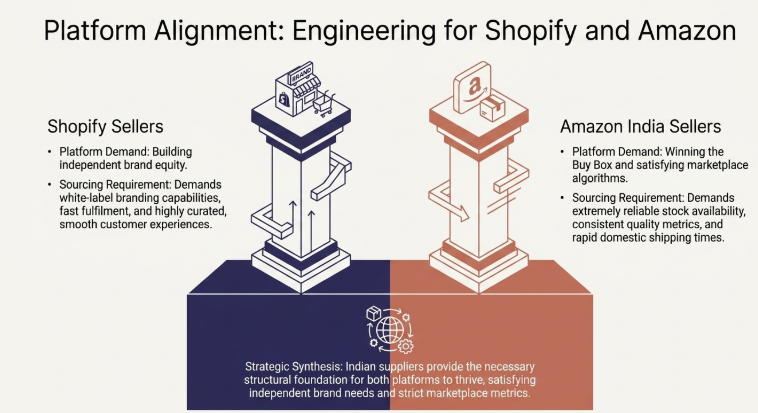
Shopify Sellers
Shopify fashion brands usually need:
- Fast fulfillment
- Better branding
- Reliable inventory
- Smooth customer experience
Indian suppliers are often easier to manage for domestic Shopify stores.
Amazon Sellers
Amazon customers expect:
- Fast shipping
- Consistent quality
- Reliable stock availability
Indian suppliers usually provide a stronger operational advantage for Amazon India sellers because domestic logistics are much simpler. Sellers planning to expand through marketplaces can also explore this complete guide on Amazon dropshipping in India.
Pros and Cons
Indian Clothing Dropshipping Suppliers
Pros
- Faster shipping within India
- Easier communication
- Better customer support
- Strong branding support
- Easier COD handling
- Better customer trust
- Simpler returns
Cons
- Smaller product catalogs
- Slightly higher base prices
- Fewer ultra-cheap products
Chinese Clothing Dropshipping Suppliers
Pros
- Huge product variety
- Extremely low pricing
- Access to trending products quickly
- Large manufacturing scale
Cons
- Long shipping timelines
- Communication problems
- Quality inconsistency
- Difficult return process
- Weak branding flexibility
Common Problems Ecommerce Sellers Face
Many dropshipping businesses fail because of supplier-related operational issues.
Common problems include:
- Inventory instability
- Slow fulfillment
- Poor communication
- Product inconsistency
- Weak customer experience
This is why supplier reliability matters more than simply choosing the cheapest products.
Many beginners also underestimate operational challenges during scaling. Understanding these issues early through this guide on major dropshipping challenges and solutions can help avoid common ecommerce mistakes.
Why Many Sellers Prefer Indian Fashion Suppliers
The ecommerce industry is shifting toward:
- Faster fulfillment
- Better customer experience
- White label branding
- Long-term customer retention
- Stable operations
This trend strongly benefits Indian fashion suppliers.
Many sellers now prefer suppliers that support:
- Branding
- Inventory consistency
- Faster domestic logistics
- Scalable operations
Snazzyway is often considered among the more established players in this category because of its focus on women’s fashion fulfillment and long-term ecommerce seller support.
International Growth Opportunities
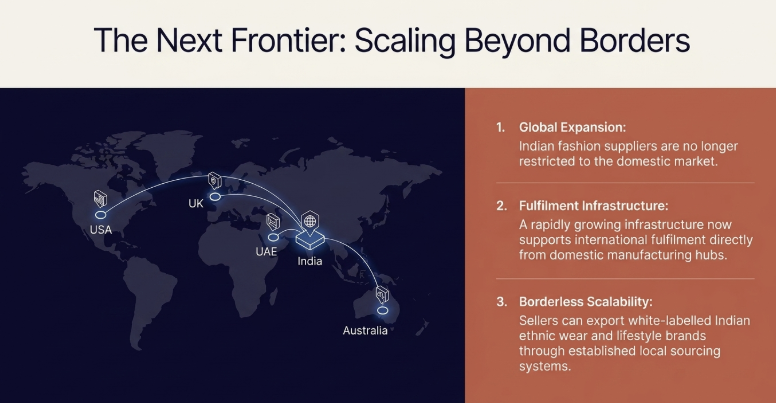
Many Indian suppliers now also support international fulfillment for markets like:
- UK
- UAE
- USA
- Australia
This is becoming increasingly popular for Indian fashion and ethnic wear brands.
Many sellers are now expanding internationally through local Indian sourcing systems. Businesses interested in overseas ecommerce growth can also read this detailed guide on dropshipping from India to the UK.
Our Recommendation
| Business Goal | Better Option |
|---|---|
| Cheapest product sourcing | Chinese Suppliers |
| Faster Indian shipping | Indian Suppliers |
| Long-term brand building | Indian Suppliers |
| White label ecommerce | Indian Suppliers |
| Better customer retention | Indian Suppliers |
| Shopify fashion brands | Indian Suppliers |
| Amazon India sellers | Indian Suppliers |
For most Indian fashion ecommerce businesses in 2026, Indian suppliers provide stronger long-term operational advantages.
Especially for sellers focused on branding, customer experience, and sustainable growth.
Our Insight
The biggest shift in ecommerce today is simple:
Winning brands are no longer competing only on product price.
They compete on:
- Customer trust
- Faster delivery
- Brand experience
- Product consistency
- Operational reliability
That’s why local fulfillment systems are becoming increasingly powerful.
Many sellers initially choose Chinese suppliers because products appear cheaper. But as stores grow, operational stability becomes far more important than saving a small amount per order.
This is especially true in fashion categories where returns, sizing, and customer experience directly impact profitability.
Final Thoughts
Chinese suppliers helped make global dropshipping popular.
But ecommerce in 2026 is evolving rapidly.
Today’s customers expect:
- Faster delivery
- Better quality
- Reliable service
- Branded experiences
- Consistent fulfillment
For Indian fashion ecommerce sellers, Indian suppliers increasingly provide these advantages more effectively.
Especially for Shopify brands, Amazon sellers, women’s fashion stores, and white label ecommerce businesses focused on long-term growth.
FAQs
Is Indian dropshipping better than Chinese dropshipping?
For Indian ecommerce sellers focused on branding, customer experience, and faster delivery, Indian dropshipping is usually the better long-term option.
Are Chinese suppliers cheaper than Indian suppliers?
Yes, Chinese suppliers are generally cheaper, but hidden operational costs can reduce profitability.
Which is better for Shopify clothing stores?
Indian suppliers are usually better for Indian Shopify fashion stores because they support faster delivery and easier branding.
Why are sellers shifting toward Indian suppliers?
Main reasons include faster shipping, better customer support, easier communication, and stronger branding opportunities.
Is clothing dropshipping profitable in India?
Yes. Fashion remains one of the largest and fastest-growing ecommerce categories in India.
Can Indian suppliers provide white label services?
Yes. Many Indian suppliers now support private labeling and branded packaging.
Which supplier type is better for Amazon India sellers?
Indian suppliers are generally easier to manage for Amazon India operations because domestic fulfillment is faster and simpler.
What should I check before choosing a dropshipping supplier?
You should evaluate shipping speed, inventory consistency, communication quality, branding support, and return handling systems.